Do you need to book a Thames river cruise in advance?
Honest answer by boat type: the big sightseeing runs take walk-ups, the twelve-seat speedboats and the tables of four are the ones that genuinely sell out.
 By James Whitfield, London river and travel writer
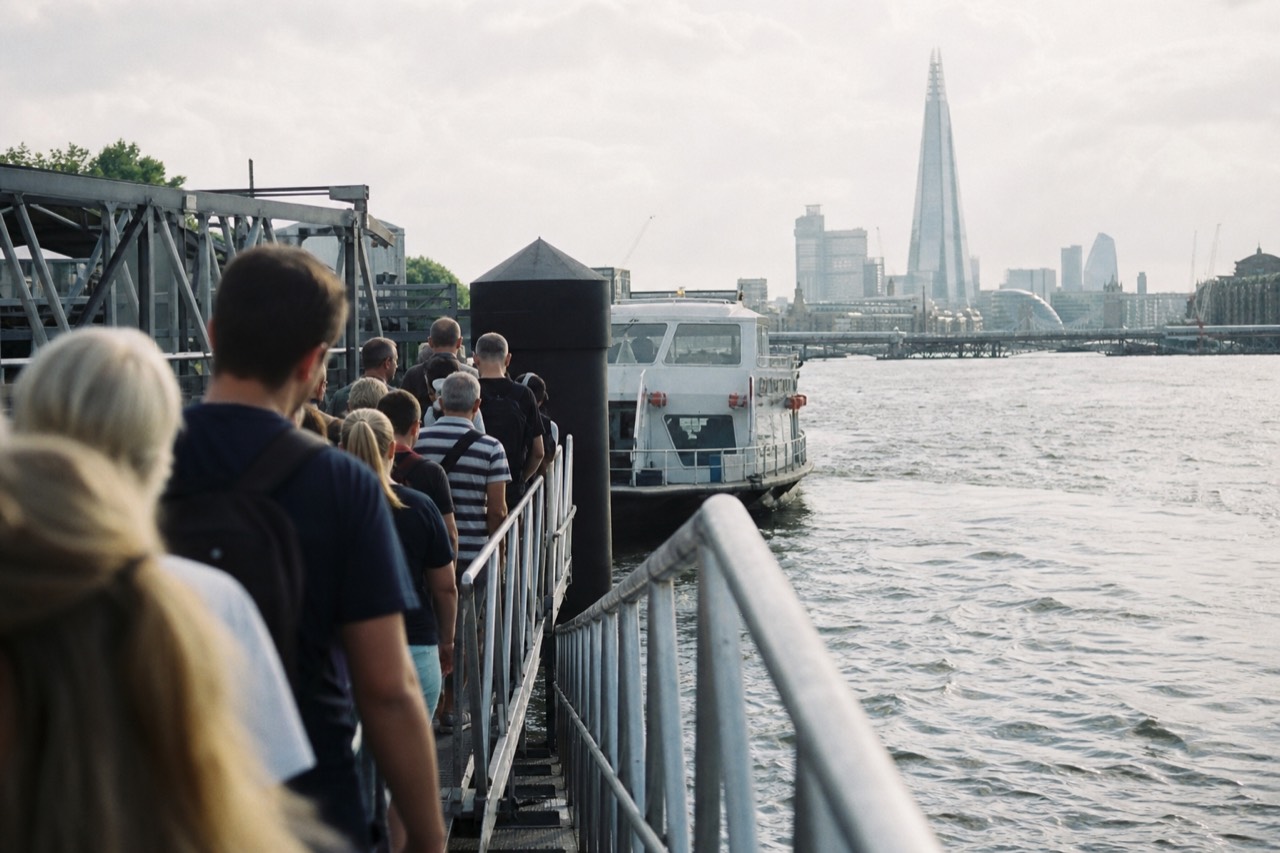
A sightseeing boat that carries a couple of hundred people, leaving every half hour from ten in the morning, is a very hard thing to sell out. A speedboat that carries twelve, on a fixed number of sailings, is not. That single difference explains almost everything about when you need to book ahead on the Thames and when you can walk down to the pier and get on the next one.
The trouble is that the advice you find treats all fifteen products as one category and tells you to book early for all of them, which is right about a third of the time and unhelpful the rest. So I went through every listing's capacity note, the operators' published timetables and the cancellation terms on both the platform and the direct channels, and sorted the fleet by how likely it actually is to be full when you get there.
Do you need to book a Thames river cruise in advance?
For the big sightseeing boats and the day pass, usually not: they run every half hour in season and carry hundreds. For the twelve-seat speedboats and the sittings with tables, yes, and preferably days ahead. Because free cancellation up to 24 hours applies on most listings, booking early costs you almost nothing either way.
The honest split is by capacity, not by popularity. City Cruises states that most of its boats take public groups of up to 250, and in peak summer the central corridor runs departures roughly every thirty minutes from about 10:00. Those are transport-scale numbers. You would need a genuinely exceptional day for a boat like that to leave without you on it.
Now look at the other end. Every fast boat on this river carries a maximum of twelve passengers per sailing. Twelve. That is not a capacity constraint, it is a queue with a hard edge, and it is exactly why those products carry the highest ratings on the water and the highest chance of being sold out when you arrive.
Meal sailings sit in between and fail for a third reason. The lunch, afternoon tea and jazz dinner listings all note that tables seat four, so the constraint is not the boat's total capacity but the number of table settings and the shape of your party. Two people turning up on the day are asking a kitchen to open a fourth cover at a table already half sold. That is a much harder ask than an empty seat on an open deck.
There is also a demand story behind all of this that has changed in the last couple of years. London river services carried a record of roughly 10.5 million journey stages in 2024/25, up around 9 per cent year on year, according to Transport for London's Travel in London analysis. The piers are busier than they were. The tour and charter slice actually fell about 8 per cent in the same period, which is a useful counterweight: the crowds are commuters and river bus passengers rather than a surge in cruise bookings.
Which Thames cruises actually sell out?
Three groups. The twelve-seat RIB and speedboat runs, where a single sailing is twelve tickets. The dining sittings, where tables seat four and party size decides whether you fit. And anything on New Year's Eve, which is a different market with its own prices and its own waitlists.
Below is the whole fleet sorted by how exposed each one is to a walk-up. The capacity notes come from the listings themselves, and the frequency picture comes from the operators' published 2026 timetables.
| Cruise | The binding constraint | Sell-out risk | How far ahead I would book |
|---|---|---|---|
| Thames Rockets 50-minute speedboat | Max 12 per boat | High | A week in summer, days off-season |
| Sunset speedboat | Max 12 per boat, adults only | High | A week, more at weekends |
| RIB to the Thames Barrier | Max 12 per boat | High | Several days |
| Tower RIB Blast | Max 12 per boat | Moderate to high | Several days |
| Private speedboat hire | Whole boat, up to 12 | High by definition | As far ahead as your date is fixed |
| Jazz dinner cruise | Departs 8:00 PM, tables seat four | High | A week or more for a weekend |
| Afternoon tea cruise | Tables seat four | Moderate to high | Several days |
| Lunch cruise | Tables seat four | Moderate | A few days |
| Dinner cruise | One sitting, one evening | Moderate | A few days, more for a Saturday |
| Elvis tribute dinner cruise | Boarding begins 7:45 PM | Moderate | A few days |
| Evening bubbly and canapés | Live performer aboard, one sailing slot | Moderate | A day or two |
| Westminster to Greenwich | Departures roughly every 30 minutes in season | Low | Same day is usually fine |
| London Eye river cruise | Frequent central sailings | Low | Same day is usually fine |
| Tower Bridge circular | Frequent central sailings | Low | Same day is usually fine |
| 24-hour hop-on hop-off pass | Sails daily 10:00 to 18:00 | Low | Same day, but buy online not at the pier |
The pattern is clean enough to remember without the table. If the listing mentions a number, book ahead. If it mentions a frequency, you have room.
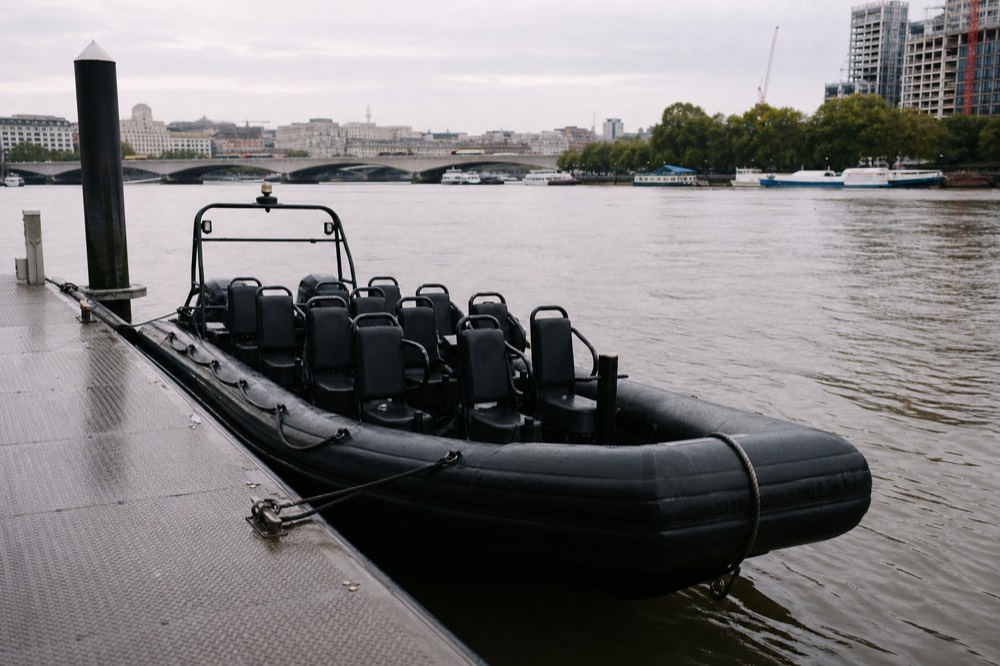
The speedboats deserve a specific note because they are the most-recommended experience on the river and the one people most often try to add at the last minute. The 50-minute Thames Rockets run holds a straight 5.0 across 4,253 reviews, which is the best-evidenced perfect score in the fleet. Twelve seats a sailing and a rating like that is a combination that does not leave much slack on a July Saturday. If it is on your list at all, check availability for your date early rather than late, and the run-by-run comparison sits in the speedboat and RIB guide.
How far ahead should you book each type of cruise?
Same day for the high-frequency sightseeing boats and the day pass. Two to three days for meal sittings and the shorter RIB blasts. A week or more for the twelve-seat speedboats in summer, for any Saturday evening with a table, and for a fixed-date occasion. Months for New Year's Eve.
Those windows are not about the risk of missing out alone. Some operators price the advance purchase lower, which turns booking early into a saving rather than an insurance policy. One river operator publishes a further 15 per cent off the online price for tickets bought at least three days ahead, on top of the online-versus-pier gap.
| Type of sailing | Book this far ahead | Why that window |
|---|---|---|
| Sightseeing single or circular | Same day to the night before | Departures roughly every 30 minutes in peak season |
| 24-hour hop-on hop-off pass | 3+ days if you want the advance discount | Online price beats the pier, and 3 days beats online |
| Lunch or afternoon tea sitting | 2 to 4 days | Tables seat four, party size decides your slot |
| Dinner or jazz dinner cruise | 5 to 10 days, more for Fridays and Saturdays | One sitting a night, tables of four |
| 20-minute RIB blast | 3 to 5 days | Twelve seats, but more sailings a day |
| 50 or 70-minute speedboat run | 5 to 10 days in summer | Twelve seats, the highest-rated products on the river |
| Private hire | As soon as the date is fixed | You are buying the only boat that sails at that time |
| New Year's Eve | Months | Prices open high and previous years have sold out |
The peak window is the multiplier on all of it. Peak fares apply on the river network from 5 July to 31 August 2026, with extra weekend sailings added from 27 June, and that is also when the piers themselves become the bottleneck. In February the same advice collapses to "book the speedboat, wing everything else".
One scheduling detail that catches people regardless of season: the day pass sails daily between 10:00 and 18:00. Booking it for a lit-river evening does not work at any notice, because the boats have stopped. The full ticket-by-ticket breakdown of what each option costs is in the cruise price guide.
What does booking early cost you if your plans change?
Almost nothing on most platform listings, which is the argument that settles this. The standard terms give a full refund for cancellations more than 24 hours before the start, with no refund inside 24 hours or for a no-show, unless the individual listing sets different conditions. Booking direct with an operator is where the terms tighten.
This is the part people get backwards. The instinct is to leave it late to stay flexible, but on the platform listings the flexibility is already built in and leaving it late is what costs you the seat. Cancel the day before and you are whole. Turn up on spec and find twelve seats gone, and you have lost the thing itself.
The direct channels work differently, and the differences are worth knowing before you decide where to buy.
| Where you book | Cancellation terms | What that means in practice |
|---|---|---|
| Platform listing, standard policy | Full refund more than 24 hours ahead, nothing inside 24 hours | Book early with almost no downside, check the listing for exceptions |
| City Cruises direct | Non-refundable and non-transferable within 48 hours of the cruise | A tighter window than the platforms, and no compensation for no-shows |
| City Cruises direct, sightseeing tickets | Rescheduled without charge up to and including the day of travel, before 17:30 | Flexible on date, not on money |
| River bus, website ticket | 72 hours' notice required to arrange a refund | The longest notice period on this page |
| River bus, app ticket | 90-day validity, not refunded | Effectively a credit rather than a cancellable booking |
| Operator cancels for reasons beyond its control | Booking price refunded, adverse weather included | The risk you cannot control is the one that is covered |
Two qualifiers matter. The 24-hour standard is a default rather than a guarantee: platform terms say it applies unless the listing states different conditions, and on one platform the standard policy covers about 85 per cent of products. So read the terms on the specific sailing rather than assuming. And private hire is the exception across the board, priced per boat and sold on its own terms, which is what you would expect when you are buying the whole sailing rather than a seat on it.
When is turning up at the pier genuinely fine?
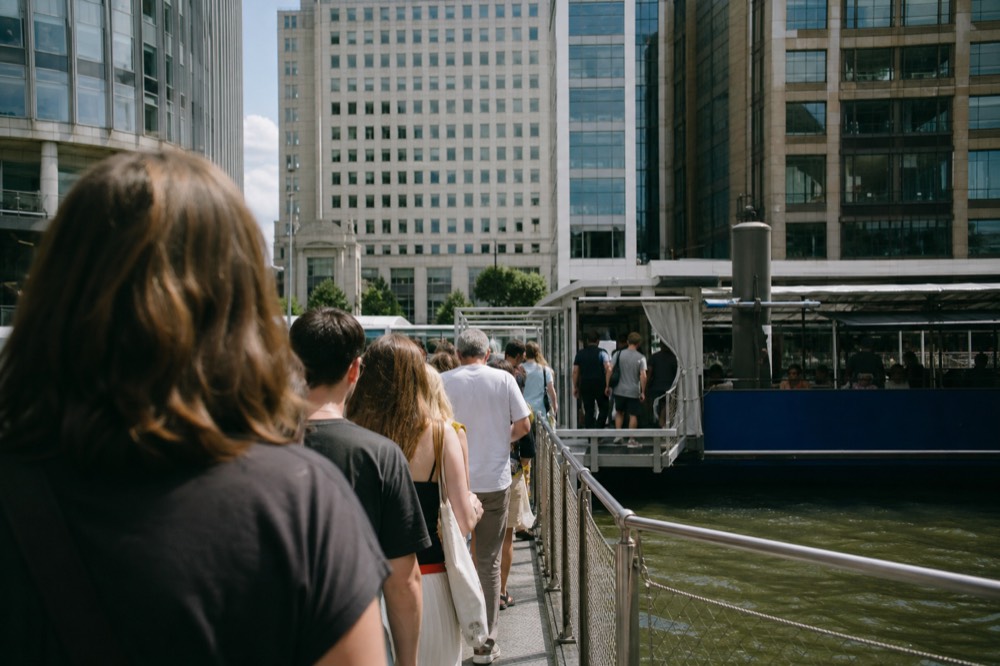
On the high-frequency central sightseeing runs, outside July and August, before about 11:00 or after about 15:00. In those conditions the next boat is half an hour away and it will not be full. What you lose by walking up is money rather than the sailing, because the pier is the most expensive place to buy a ticket.
That last point is the one that changes the advice. Walking up works, but it costs. One river operator publishes a day ticket at £29.30 online against £32.60 bought at the pier, and states that buying online or in the app saves up to around 30 per cent against standard pier fares. Booking on your phone while standing on the pontoon is a real strategy and it is better than joining the ticket-office queue.
Speaking of which, the queue is the actual reason to book ahead on a big boat. City Cruises asks passengers to arrive at least fifteen minutes before departure and to allow more time if buying at the ticket office. The river bus network recommends ten minutes before boarding and at least five minutes before any intended sailing. Those margins are honest and they assume you already have a ticket.
Three conditions make a walk-up sensible rather than optimistic. The boat runs at least every half hour. You are flexible about which sailing you take. And you are not a party of six trying to sit together at tables that seat four. Miss any of those and the case for booking ahead comes back.
There is one more variable that nobody plans for and it is not crowding. The Thames through London is tidal, overseen by the Port of London Authority, whose remit runs 95 miles from Teddington to the North Sea, and at least one operator upstream states outright that its sailing times vary from day to day with the tides. Central sightseeing timetables are fixed and published, so this bites mainly on the longer upstream runs, but if your plan hangs on an exact time you can check the water against the PLA's own tide prediction tool.
Which dates break all the rules?
New Year's Eve, first and by a distance: 90-minute speedboat seats opened from £449 a head with waitlists after previous sell-outs, and other fireworks sailings from £369. After that, summer Saturdays, the whole 5 July to 31 August peak window, and any evening sailing with a fixed table on a date people celebrate.
New Year's Eve is not really the same product. The prices are several times the normal fare for the same length of trip, the sailings are sold months out, and the operators publish waitlists rather than availability. If that is the plan, it is a diary entry rather than a booking decision, and the ordinary rules on this page do not apply to it.
| Date or window | What changes | What to do about it |
|---|---|---|
| 31 December | Fireworks sailings from £369, speedboats from £449, waitlists | Book months ahead or choose another night |
| 5 July to 31 August 2026 | Peak fares network-wide, fullest decks | Book the fast boats and the tables well ahead |
| Weekends from 27 June | Extra sailings added, higher weekend demand | More capacity, but it fills |
| School holiday weeks | Family demand on sightseeing boats and day passes | Sightseeing still fine, tables get tight |
| Saturday evenings, any month | One sitting, tables of four | A week ahead for dinner or jazz |
| 24 to 26 December | Some operators run no service at all | Check the specific date before planning around it |
| Late October to March | Reduced winter timetables | Fewer sailings, so check times rather than assuming |
The mirror image is the quiet season, and it is genuinely a different river. From late October the timetables thin out, the fares drop, the decks empty and the light goes early enough that a mid-afternoon sailing catches the city turning on. Booking ahead in February is about making sure a boat is running at all, not about competing for a seat.
For a fixed occasion in any season, the tables are the constraint and they are worth locking early. The afternoon tea sitting is the most-reviewed meal on the river outside the sightseeing boats, at 4.4 across 3,823 reviews for ninety minutes from Tower Pier, and its tables seat four like the rest. Menus, sittings and age rules are laid out in the afternoon tea guide and the dinner cruise guide.
Does booking ahead save money as well as a seat?
Yes, and the saving is bigger than most people expect. Buying online or in the app rather than at the pier saves up to about 30 per cent on river network fares, and booking a day ticket at least three days ahead takes a further 15 per cent off the online price. Advance booking is the cheapest ticket, not the dearest.
That runs against the instinct people bring from airlines, where waiting is punished and early birds pay less only sometimes. On this river the pricing is simpler: the pier is the premium channel because it is the convenient one, and the operator would rather have your money and your date locked in a week early.
The saving stacks in a specific order. Start from the pier fare. Buy online instead and you are down as much as 30 per cent. Buy three or more days ahead and another 15 per cent comes off the online price. Then choose a shoulder-season date rather than the 5 July to 31 August window, and the fare drops again. None of that requires a promotion or a code.
Where it does not stack is on the flexible platform listings, which quote a starting price for the date and let you cancel free up to 24 hours ahead on most sailings. Those are a different trade: you pay the listed rate and you buy the right to change your mind. For anything weather-dependent or built around an occasion, that trade is usually worth taking. The ranked comparison of all fifteen boats, with what each one is genuinely for, sits in the best cruise guide, and every listing on Thames River Cruises shows the terms attached to its own ticket.
One thing worth ignoring: the idea that prices drop at the last minute if you hold your nerve. I could not find a single case of that pattern on these fifteen listings. The discounts that do exist are seasonal operator sales rather than late-availability dumps, and a two-course lunch sailing on offer at £38 against a usual £53 in late August is what that looks like when it happens.
What happens if the weather turns?
Rain rarely cancels anything. The big boats have indoor seating and heating, so bad weather moves you inside rather than off. If the operator does cancel because circumstances beyond its control make the sailing impossible, adverse weather included, the booking price is refunded. Small fast boats are the exception, since there is no indoors on a twelve-seat RIB.
This matters to the booking question because a lot of people leave it late specifically to see the forecast. On the big sightseeing and dining boats that caution buys you very little: City Cruises states plainly that all its boats have inside seating and are fully heated, so a wet booking is a worse booking rather than a lost one. You lose the open top deck, which is where you wanted to be, and you keep the sailing.
On a RIB it is a fairer instinct, because the weather is the entire experience and there is nowhere to retreat to. Even there, though, the refund mechanics work in your favour rather than the forecast doing so. If the operator makes the call, you get the money back. If you make the call more than 24 hours out, most listings refund you anyway.
So the weather argument for leaving it late mostly evaporates, and what is left is the twelve-seat problem. Watching a forecast for a week and booking on the day is how people end up standing on a pontoon in perfect sunshine, watching the boat they wanted leave with somebody else's twelve passengers aboard. Booking early and cancelling if it turns is the strictly better strategy on nearly every listing. If a fast boat is what you are after, see which Barrier run dates are open and take the free cancellation as your weather hedge. How much of a day each option actually takes is broken down in how long a Thames cruise takes.
Common questions
Can you just turn up for a Thames river cruise?
On the big sightseeing boats and the day pass, usually yes, especially outside July and August and away from the middle of the day. Departures run roughly every thirty minutes in season and the boats carry hundreds. You will pay more at the pier than online, so book on your phone even if you are already standing there.Do Thames speedboat trips sell out?
More than anything else on the river. Every fast boat carries a maximum of twelve passengers per sailing, and the 50-minute run holds a straight 5.0 across 4,253 reviews, so demand meets a hard limit. In summer, book five to ten days ahead. Off-season, a few days is usually enough.How far in advance should you book a Thames dinner cruise?
Five to ten days for a weekday, more for a Friday or Saturday. There is one sitting a night and tables seat four, so party size and date matter more than total capacity. Add extra notice for anniversaries, birthdays and anything in December, when the evening boats are competing with the whole city's calendar.Is it cheaper to book a Thames cruise in advance?
Usually. Buying online or in the app rather than at the pier saves up to about 30 per cent on river network fares, and booking a day ticket at least three days ahead takes a further 15 per cent off the online price. There is no reliable last-minute discount on these listings, so waiting tends to cost rather than save.Can you cancel if the weather looks bad?
On most listings, yes, free up to 24 hours before departure with a full refund, though the terms sit on the individual listing and a few sailings differ. If the operator cancels because circumstances beyond its control make the sailing impossible, adverse weather included, the booking price is refunded. Direct bookings with an operator can be stricter than the platform default.The short version: book the small boats and the tables, wing the big ones, and buy online either way. On this river the cost of booking early is close to zero and the cost of leaving it late is twelve seats you cannot get back.