Thames Sightseeing Cruise: Circulars, One-Ways and the Greenwich Run (2026)
Four daytime tickets, three completely different shapes of trip. Here is what separates a circular from a one-way, and which one is worth your hour.
 By James Whitfield, London river and travel writer
Short answer
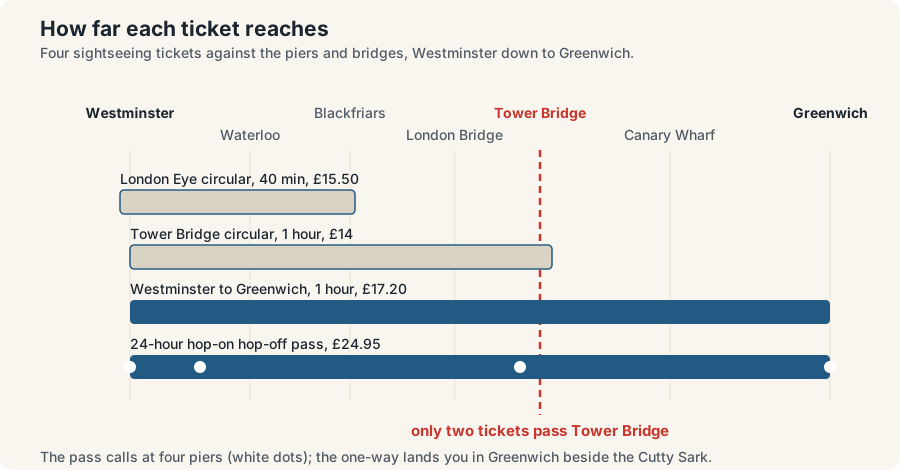
Thames sightseeing cruises come in three shapes: a 40-minute circular from London Eye Pier at £15.50, a one-hour circular from Westminster at £14, and the one-hour one-way run to Greenwich at £17.20. A 24-hour hop-on hop-off pass at £24.95 covers four piers and beats two singles.
Stand on Westminster Pier at ten in the morning and three different boats will leave in the space of half an hour, all of them selling something a passenger would describe as a Thames sightseeing cruise. One comes back to the same pontoon in an hour. One comes back in forty minutes from a pier half a mile away. One does not come back at all, because it finishes at Greenwich and expects you to be pleased about that.
Those are genuinely different products with genuinely different prices, and the listings do a poor job of saying so. I went through the 2026 timetables from both central sightseeing operators, lined up the four daytime tickets on price, length, route and rating, then worked out which one suits which kind of day. The answer is not the cheapest, and it is not the most expensive either.
What is the difference between a circular cruise and a one-way?
A circular starts and ends at the same pier, so you see one stretch of river twice and finish where you began. A one-way carries you downstream to a different place, usually Greenwich, and leaves you there. Circulars are cheaper and simpler; the one-way costs more and gives you a destination instead of a return leg.
The practical difference is what you are holding at the end. A circular is a self-contained hour: you step off where you got on, with your day otherwise untouched. That suits a tight schedule and a fixed base. The Greenwich run is a piece of transport as much as a cruise, ending beside the Cutty Sark with the Old Royal Naval College, the market and the Observatory hill within a short walk, so it converts an hour on a boat into a half-day out.
There is a second difference that the price tags hide. A circular repeats itself, and repetition on this river is not neutral: the commentary covers the same buildings twice, and the light on the return leg is often better than on the way out. The one-way never repeats, and everything downstream of Tower Bridge is territory that no circular reaches at all. Canary Wharf across the water, the Isle of Dogs, the Greenwich approach: that is the half of the trip most visitors have never seen.
| Circular cruise | One-way run | |
|---|---|---|
| Where it ends | Back at the pier you left from | Greenwich, beside the Cutty Sark |
| Typical length | 40 minutes to 1 hour | About 1 hour |
| Starting price | £14 to £15.50 | £17.20 |
| River covered | The central stretch, seen twice | Westminster to Greenwich, never repeated |
| Getting back | Nothing to arrange | Rail, the river bus or another cruise ticket |
| Best for | A fixed schedule and a central base | Turning a boat trip into a half-day |
| The weak point | The second half is the first half again | You have to plan the return |
Reviewers split cleanly along that line. People who booked a circular and wanted a destination feel short-changed. People who booked the Greenwich run without a plan for getting back feel stranded. Both are booking errors rather than boat problems, and both are avoidable in about ninety seconds of thought before you pay.
What is the 40-minute circular cruise?
It is the short sightseeing loop from London Eye Pier: 40 minutes on the water for £15.50, covering the Westminster and South Bank stretch with a guide pointing out what you are passing. It rates 4.8 across 1,912 reviews, the highest score of any daytime sightseeing boat, and it is the easiest cruise in London to slot into an existing plan.
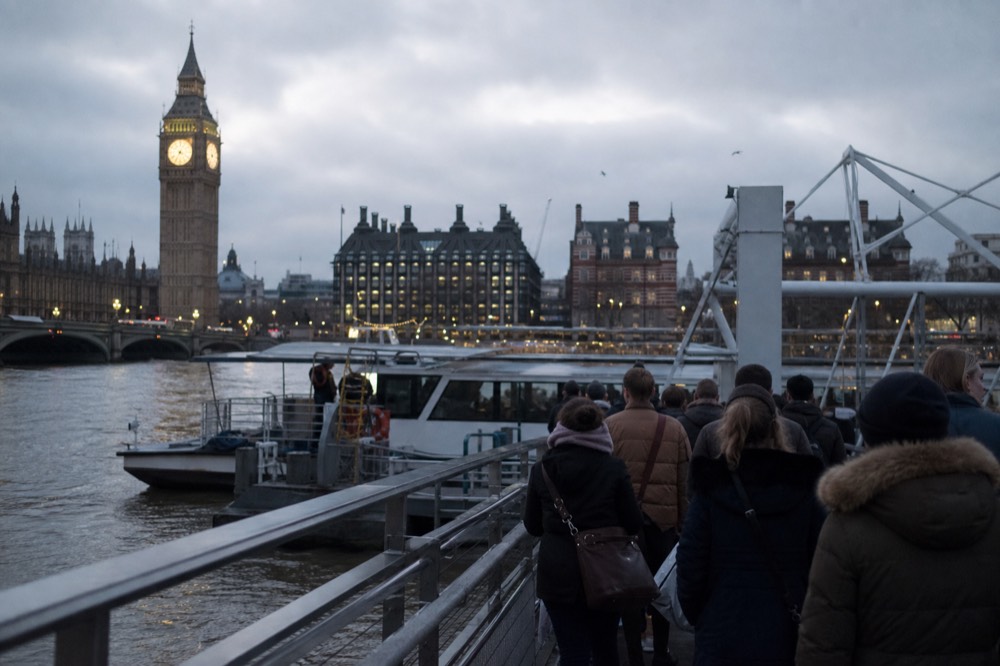
The 40-minute circular exists because of where it starts. London Eye Pier sits in the busiest tourist corner of the city, at the foot of the wheel, a few minutes from Waterloo and directly across the water from Parliament. That means it does not need to be a destination in itself: people book it because they are already standing there and have forty minutes.
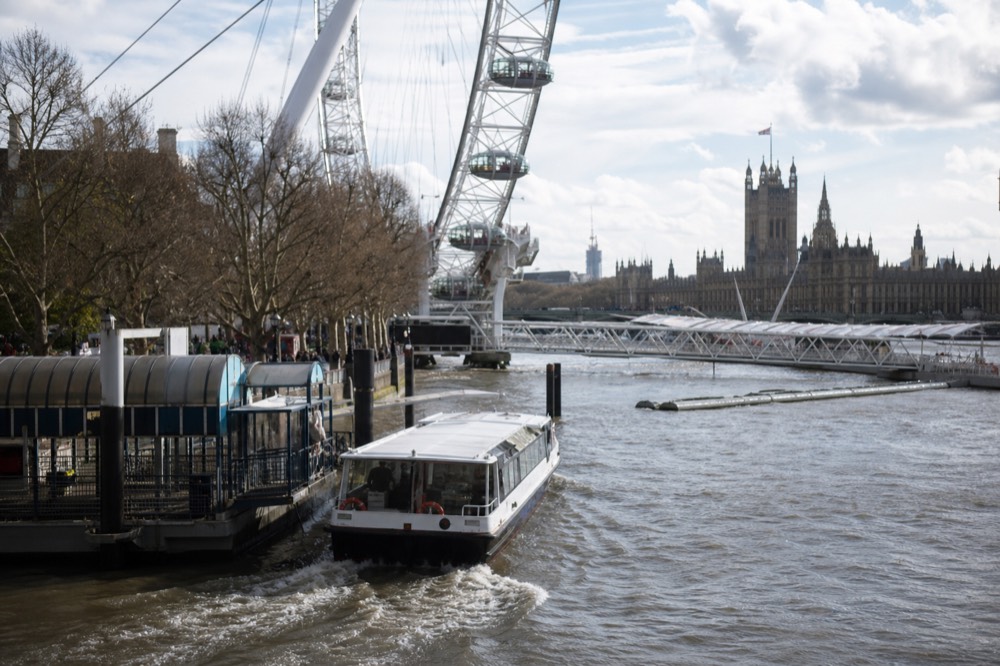
What it gives up is distance. Forty minutes buys the central reach and not much beyond it, so Tower Bridge is the eastern limit rather than the middle of the trip, and the docklands never appear. What it gains is a rating: 4.8 is the best of the daytime boats, well ahead of the one-hour circular from Westminster at 4.2, and it holds that score across nearly two thousand reviews. Short and good beats long and average more often than the price list suggests.
There is a real overlap worth flagging before you book it. The wheel above the pier covers the same two miles of river from 135 metres up, with the whole bend visible at once. If you have already been on it, the 40-minute circular adds less than you would hope, and the longer Greenwich run is the ticket that shows you new ground. That trade is set out in more detail in the London Eye river cruise guide, and you can check today's departure times if you are already on the South Bank with an hour spare.
Which sightseeing cruise should you book?
The one-hour Westminster to Greenwich run for a first visit, at £17.20 with 25,220 reviews behind a 4.5 rating. The 40-minute London Eye circular if you are short of time and already on the South Bank. The £14 hour-long circular from Westminster if price is the deciding factor. The £24.95 day pass if you plan to sail more than once.
Set the four tickets side by side and the ranking is not close on evidence. The Greenwich one-way carries more reviews than every other listed sailing on the river added together, which makes its 4.5 the most reliable number in the fleet. A rating built on 25,000 opinions tells you far more than a higher score built on a few hundred.
The £14 circular is the interesting outlier. It is the cheapest ticket on the water and the weakest-rated sightseeing boat at 4.2, which is exactly the sort of pairing that price-first booking walks into. It is not a bad hour. It is simply the one boat where the value argument and the satisfaction argument point in different directions, and knowing that before you book is the difference between a fine trip and a mild disappointment.
| Ticket | Shape | Length | From | Rating (reviews) | Boards at |
|---|---|---|---|---|---|
| Westminster to Greenwich | One-way, downstream | About 1 hour | £17.20 | 4.5 (25,220) | Westminster Pier |
| London Eye river cruise | Circular | 40 minutes | £15.50 | 4.8 (1,912) | London Eye Pier |
| Tower Bridge circular from Westminster | Circular, out to St Katharine's | 1 hour | £14 | 4.2 (523) | Westminster Pier |
| 24-hour hop-on hop-off pass | Unlimited, four piers | As long as you like | £24.95 | 4.4 (3,283) | Westminster, London Eye, Tower, Greenwich |
The pass changes the arithmetic once you plan a second sailing. One Greenwich single is £17.20; two of those is £34.40, already above the £24.95 pass, and the pass adds the London Eye and Tower stops on top of that. Anyone doing more than a single point-to-point hop is better off with the day ticket, which is why the hop-on hop-off guide treats it as a transport product rather than a cruise. Its one weakness is the clock: it sails daily between 10:00 and 18:00, so an evening arrival gets very little out of it.
Price is not the only lever. Buying online rather than at the pier is consistently cheaper across the river, and on the river bus network the operator publishes both figures: £29.30 online against £32.60 at the pier for a day pass, with a further 15 per cent off for bookings made at least three days ahead. Before you settle on the cheapest line in the table, check what the hour-long circular costs on your date, because the gap between tickets narrows on quiet days.
What do you pass on each stretch of the river?
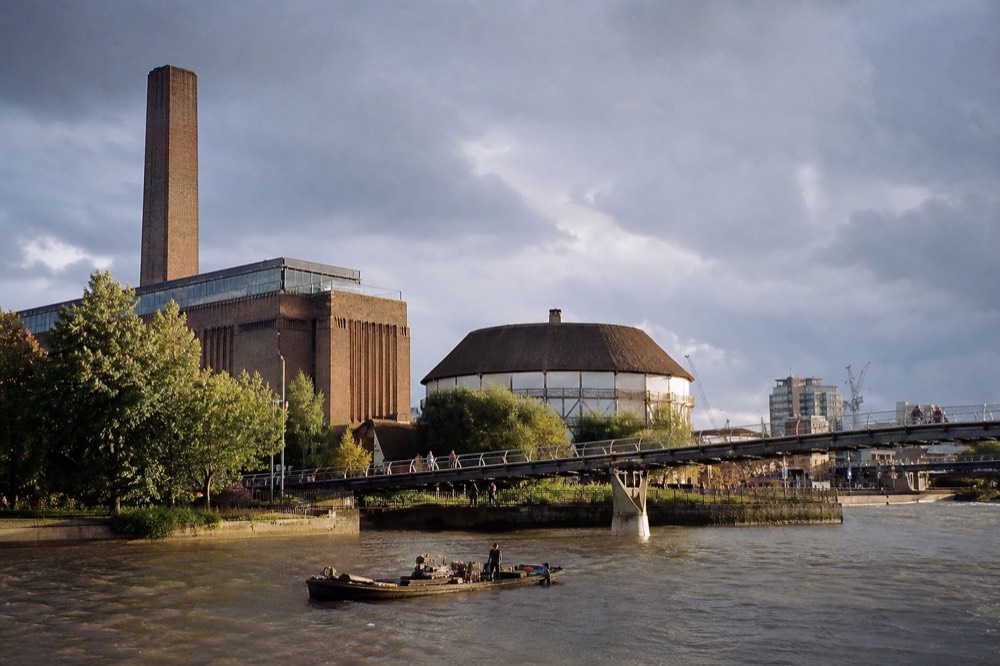
Four distinct stretches. Westminster to Blackfriars gives you Parliament, the South Bank and Somerset House. Blackfriars to London Bridge gives you St Paul's, Tate Modern and the Globe. London Bridge to Tower Bridge gives you the Shard, HMS Belfast, the Tower and the bridge itself. Everything beyond that is docklands, and only the Greenwich boats go there.
The density is what makes this river work as a sightseeing route. Between Westminster and Tower Bridge is barely three miles of water, and it carries more famous buildings than any comparable stretch in Britain. London faced its best architecture at the river and then turned its streets away from it, so the frontage stayed open while the roads behind filled in. If the bridge itself is the draw, its high-level walkways and engine rooms are a visit of their own after the boat; check entry times here, booked separately from any sailing.
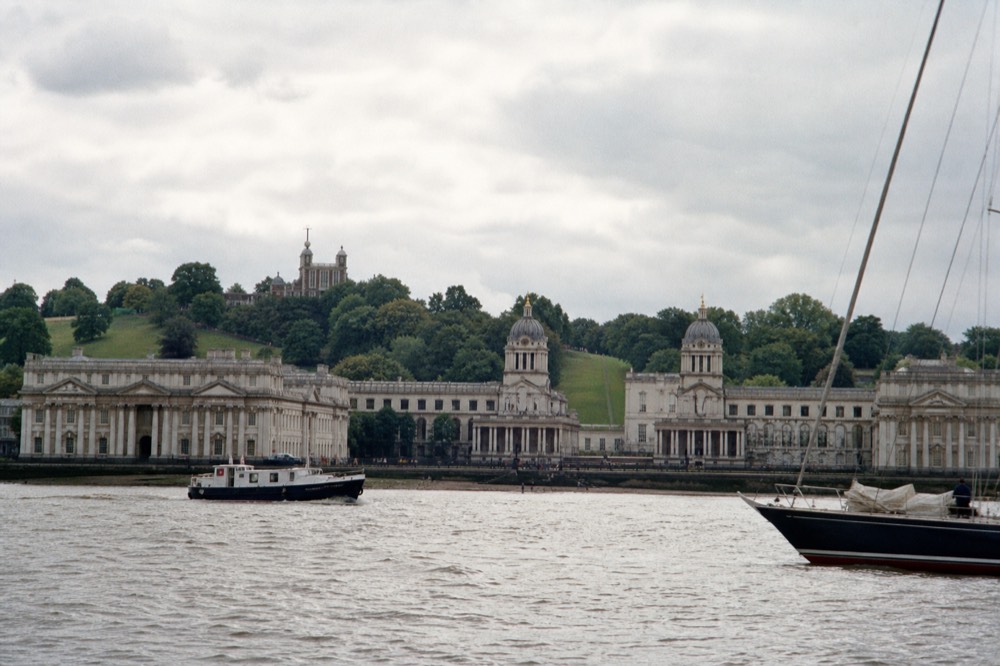
Beyond Tower Bridge the character changes completely, and this is the part that separates a circular from a one-way. The river widens, the banks go industrial and then residential, Canary Wharf rises across the water, and the boat finishes at a riverside that is a designated World Heritage Site. The composition Greenwich was built for, the Queen's House framed between two colonnaded blocks with the Observatory on the hill behind, only resolves properly from mid-river.
| Stretch | What is on the north bank | What is on the south bank | Which boats cover it |
|---|---|---|---|
| Westminster to Waterloo | The Houses of Parliament, Whitehall Court, the Embankment | The London Eye, the Southbank Centre, the National Theatre | All four |
| Waterloo to Blackfriars | Somerset House, the Temple, the Oxo Tower opposite | The Oxo Tower, Bankside approaches | All four |
| Blackfriars to London Bridge | St Paul's dome, the City skyline | Tate Modern, the Millennium Bridge, Shakespeare's Globe | All four |
| London Bridge to Tower Bridge | The Tower of London, St Katharine Docks | The Shard, Southwark riverside, HMS Belfast | All four |
| Tower Bridge to Canary Wharf | Wapping, Limehouse, the Isle of Dogs towers | Rotherhithe, Surrey Quays | Greenwich boats and the pass |
| Canary Wharf to Greenwich | The Isle of Dogs waterfront | The Cutty Sark, the Old Royal Naval College, Greenwich Park | Greenwich boats and the pass |
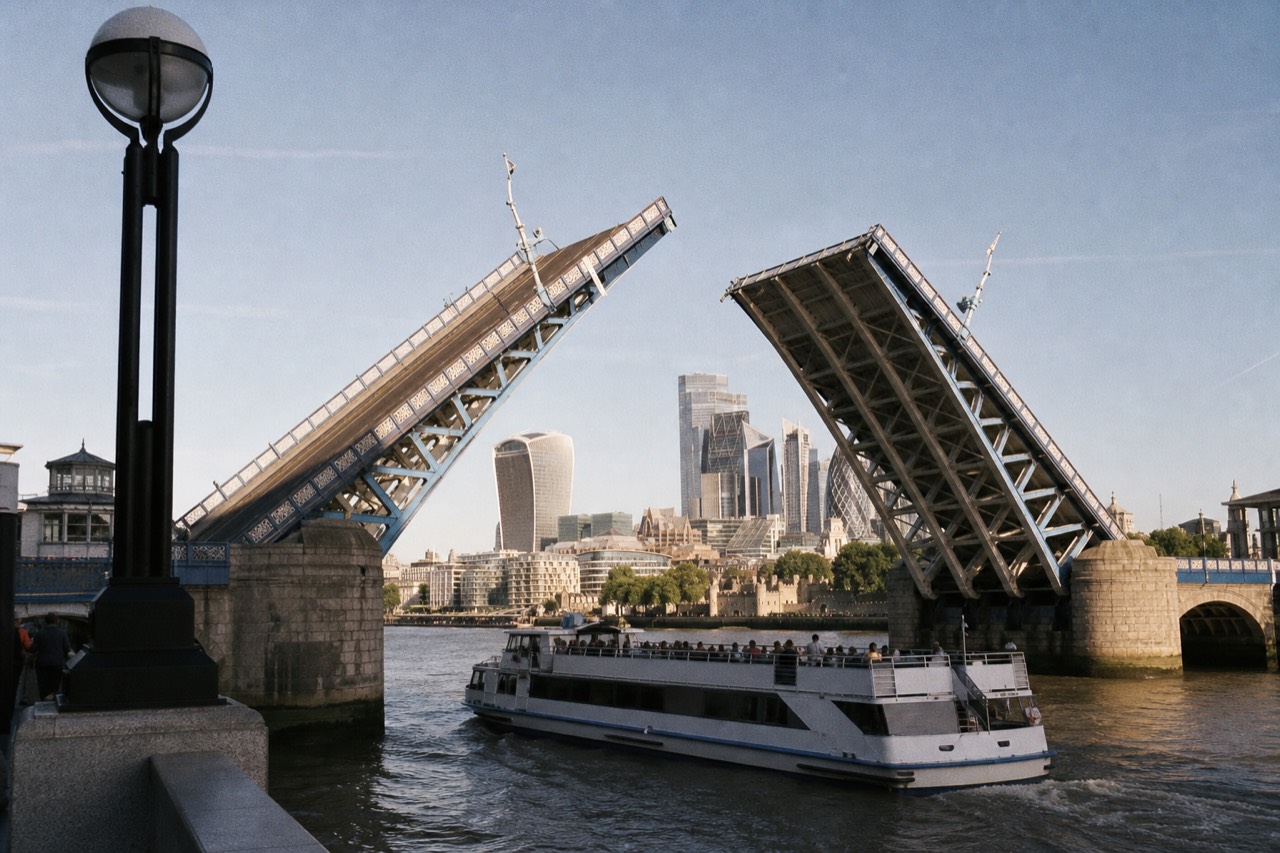
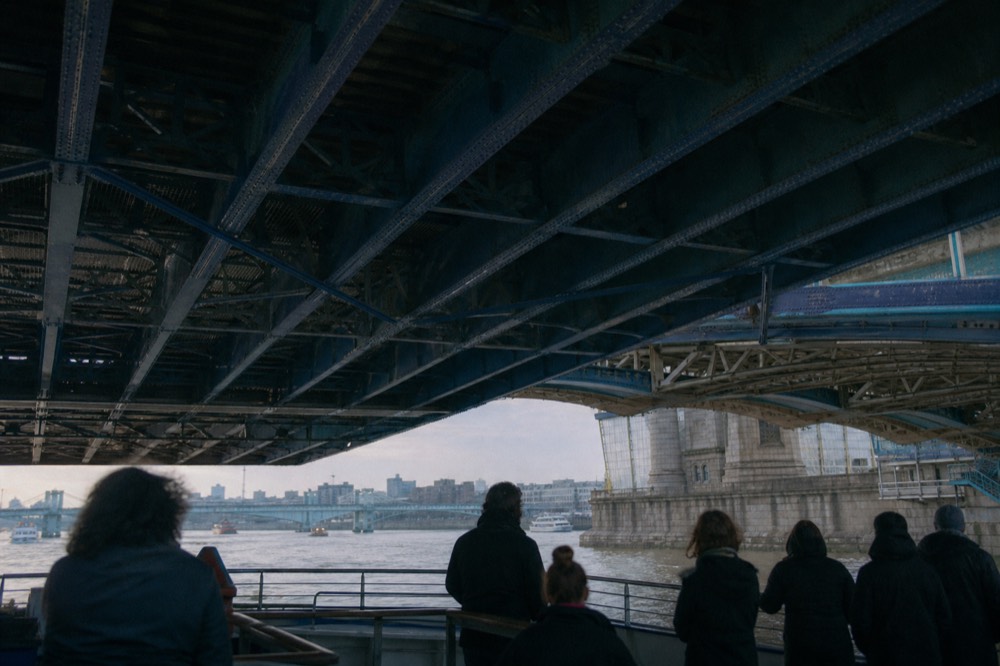
Tower Bridge is the moment everybody photographs and the one that rewards being on deck. From the road it is a famous silhouette. From underneath, with the walkways overhead and the ironwork filling the sky, the scale reverses and the thing that looks decorative from Tower Hill looks industrial. Nobody sitting inside the saloon gets that shot.
How often do the boats run, and do the tides move the times?
Departures run roughly every 30 minutes from about 10:00 through the day, on published seasonal timetables rather than a fixed year-round clock. The central sightseeing schedules are fixed and published, not tide-flexed. Further up the river, some operators do shift their sailing times with the tide, which is a different service and a different problem.
The tide question comes up constantly and deserves an exact answer rather than a reassuring one. The Thames through London is genuinely tidal, and the Port of London Authority publishes the official tide tables and a tide prediction tool for the river. That does not mean every cruise moves with the water. On the central Westminster to Greenwich corridor the operators publish fixed seasonal timetables, and those are the times you book. Upstream, on the Kew and Hampton Court runs, at least one operator states plainly that its sailing times vary from day to day with the tides. The tide is one of five river facts worth knowing before you board.
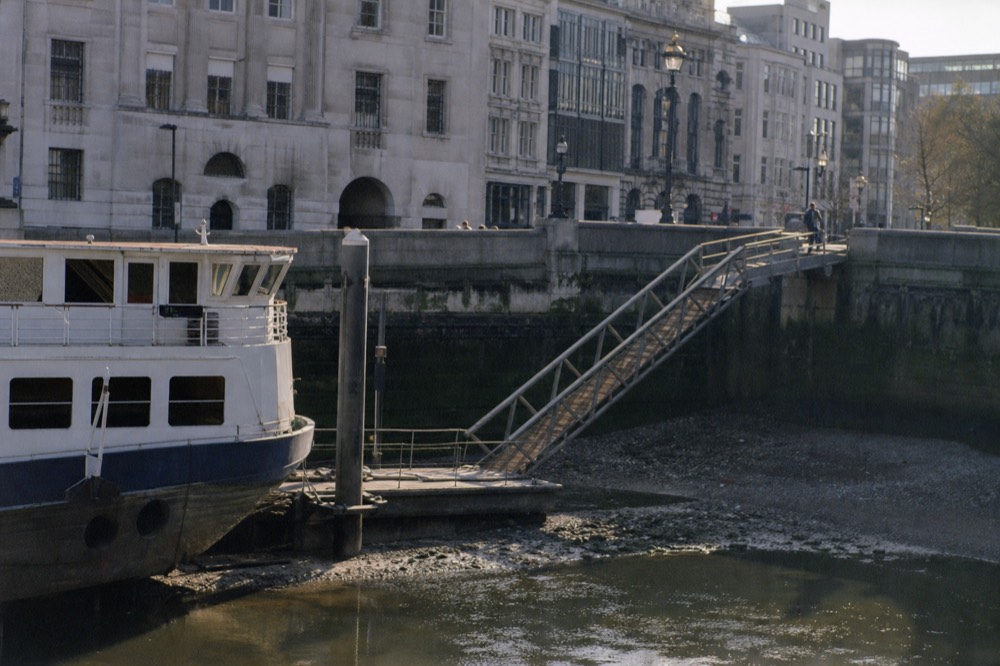
Where the tide does bite in central London is at the pier rather than on the water. Pontoons rise and fall with the river, so the gangway angle changes through the day, and the river bus network cites exactly that as the reason three of its piers are not step-free: the brow can become too steep depending on the tide. If anyone in your party has limited mobility, that is the practical tidal effect to plan around.
| Ticket | Frequency | First departures | Last useful sailing | Realistic block in your day |
|---|---|---|---|---|
| Westminster to Greenwich, one-way | About every 30 minutes in peak season | From about 10:00 | Check the season timetable | 2 to 2.5 hours, more if you stay in Greenwich |
| London Eye 40-minute circular | Through the day | Morning onwards | Late afternoon | About 1 hour 15 |
| Tower Bridge circular from Westminster | Through the day | Morning onwards | Late afternoon | About 1 hour 45 |
| 24-hour hop-on hop-off pass | Every 30 minutes at four piers | 10:00 | Boats stop at 18:00 | A full day, evening excluded |
| Westminster to Tower Bridge leg | Part of the Greenwich route | From about 10:00 | Season dependent | About 1 hour 15 |
Which pier you start from decides more than most people realise, because it sets what you see first and how long the walk is at either end. Four piers carry the central cruise fleet; the river bus network adds several more.
| Pier | Which tickets sail from it | Nearest station | What is beside it |
|---|---|---|---|
| Westminster Pier | The Greenwich one-way, the one-hour circular, the day pass | Westminster | The Houses of Parliament and the Elizabeth Tower |
| London Eye Pier | The 40-minute circular, the day pass, the speedboats | Waterloo | The wheel, the Southbank Centre, County Hall |
| Tower Millennium Pier | The day pass, the lunch and tea sittings, the short RIB runs | Tower Hill | The Tower of London and Tower Bridge |
| Greenwich Pier | The Greenwich arrivals, the day pass, the river bus | Cutty Sark DLR | The Cutty Sark and the Old Royal Naval College |
| Embankment Pier | River bus services and some sightseeing legs | Embankment | Victoria Embankment Gardens, Cleopatra's Needle |
| Bankside and Festival piers | Sightseeing legs on the Greenwich corridor | London Bridge, Waterloo | Tate Modern and the Globe, the Southbank Centre |
Arrive-early guidance is published and it is not generous. The main central operator asks passengers to be at the pier at least 15 minutes before departure, and longer if buying at the ticket office. The river bus network asks for ten minutes before boarding and at least five minutes before an intended sailing. On a July Saturday at Westminster, fifteen minutes is the minimum rather than the target. A fuller breakdown of what each route eats out of a day sits in how long a Thames cruise takes.
Which side of the boat should you sit on?
On the Greenwich run, the north bank sits to your left going downstream and holds the Tower, St Paul's and Somerset House; the south bank on your right holds the Shard, the Globe, Tate Modern and Greenwich itself. The north bank faces south and stays lit through the day, so it photographs better. The honest answer, though, is the open top deck, where sides stop mattering.
Direction of travel is the thing to fix first. Heading downstream from Westminster you are travelling east, so port is north and starboard is south. Reverse it on the way back and everything swaps. Anybody who insists there is a single correct side has not thought about the return leg.
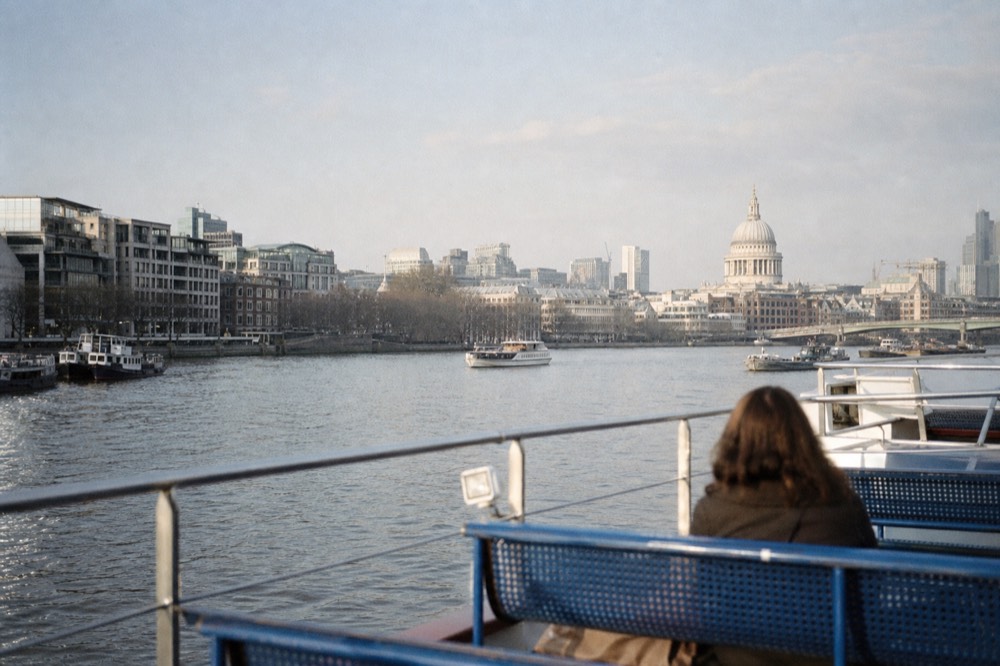
The light argument is the more useful one. Through the central reaches the river runs roughly west to east, which means the north bank faces south and takes sun for most of the day while the south bank sits in its own shade. St Paul's, the Tower and the City towers are the lit side. The Globe, Tate Modern and the Shard are the backlit side, which is dramatic in the morning and flat by the middle of the afternoon.
Then there is the top deck, which resolves the whole question. The boats carry open decks as well as heated indoor saloons, and on the open deck you can cross from one side to the other in three steps. In summer that deck fills within minutes of boarding, so the practical tactic is to be early at the pier and go straight up rather than to agonise over seats. In winter the deck is empty and the saloons are full, which is the wrong way round for anyone who came for the view.
One more seating note that costs nothing. On the Greenwich run the last ten minutes are the payoff, with the Naval College opening out ahead, and the bow is where that shot lives. Passengers who sat down at Westminster and never moved miss it entirely.
What do children pay, and which ticket suits a family?
On the sightseeing boats, infants aged 0 to 4 travel free, the child band runs 5 to 15, and adult fares start at 16. On the river bus network, under-4s travel free with a maximum of two per ticketholder and children aged 5 to 15 get half the adult fare. Those bands differ from the dining sittings, where children start paying at three.
Families are the group most often sold the wrong ticket, and it happens because the age bands move between products rather than between operators. A fourteen-year-old is a child on the sightseeing cruise, a child on the river bus, and an adult at the lunch table. Booking the wrong band means sorting it out at the pier, which on a busy morning costs you the sailing you wanted.
| Operator and product | Infants | Child band | Adult from | Family option |
|---|---|---|---|---|
| Sightseeing cruises | 0 to 4 travel free | 5 to 15 | 16 | Child fares on every ticket |
| 24-hour hop-on hop-off pass | 0 to 4 travel free | 5 to 15 | 16 | Child fares on the pass |
| River bus, day pass | Under 4 free, maximum two per ticketholder | 5 to 15 at half the adult fare | 16 | Two adults and up to three children for £58.70 online |
| River bus, single | Under 4 free | 5 to 15 at half fare | 16 | Central single £11.70 adult, east zone £7.20 |
| Lunch and afternoon tea sittings | 0 to 2 free unless they need a seat | 3 to 12 | 13 | Tables seat four |
| Dinner cruise | Not applicable | Listed as unsuitable under 13 | 13 | None |
For a family day the pass usually wins, and not only on price. It removes the need to time anything, it turns the river into the way you move between the Tower, the South Bank and Greenwich, and children who lose interest after twenty minutes can be taken off at the next pier rather than sat through another circuit. The one caveat is the 10:00 to 18:00 window, which rules out an evening.
River traffic backs up the idea that this is transport as much as sightseeing. Across all London river services, journeys reached a record of roughly 10.5 million stages in 2024/25, up around 9 per cent year on year, according to Transport for London's Travel in London analysis. The tour and charter slice fell about 8 per cent in the same period, so the growth is in people using boats to get somewhere. How the two compare, ticket for ticket, is worked through in Uber Boat against the tour boats, and every sailing on the river is set side by side on Thames River Cruises.
Accessibility needs the per-operator answer rather than a general one. The river bus network states that all its piers are step-free and wheelchair accessible except Cadogan, London Bridge City and Wandsworth Riverside Quarter, where the brow can become too steep depending on the tide. The main cruise operator requires a disability to be disclosed at booking, states that passengers must be able to walk aboard with an able-bodied helper, does not permit electronic wheelchairs, and carries a maximum of two wheelchair spaces per boat. Those are two different standards on the same river.
If you want the full day rather than the single hour, see what the 24-hour pass costs on your date before committing to a one-way, and cross-check it against the full price breakdown and the ranked list of every cruise.
Common questions
What is the 40-minute circular cruise on the Thames?
It is the short sightseeing loop from London Eye Pier, covering the Westminster and South Bank stretch with a guide and returning to the same pier after about 40 minutes. It starts at £15.50 and rates 4.8 across 1,912 reviews, the best score of any daytime sightseeing boat. It does not reach the docklands or Greenwich.Is the Westminster to Greenwich cruise better than a circular?
For a first visit, yes. It runs about an hour for £17.20, never repeats a stretch of river, and ends beside the Cutty Sark with the Old Royal Naval College and Greenwich Park within a short walk. It carries 25,220 reviews at 4.5 stars, more than every other listed sailing on the river added together. The trade is that you have to plan a way back.How often do Thames sightseeing boats run?
Roughly every 30 minutes from about 10:00 through the day in peak season, on published seasonal timetables. The central service runs daily year round apart from Christmas Day, with a reduced winter timetable from late October. One operator on the Greenwich corridor also publishes no service from 24 to 26 December, so late December needs checking rather than assuming.Do Thames cruise times change with the tide?
Not on the central sightseeing routes, which run to fixed published timetables. Further upstream, towards Kew and Hampton Court, at least one operator states that its sailing times vary from day to day with the tides. What the tide does affect in central London is the pier: pontoon gangways get steeper at certain states of the tide, which is why a few piers on the river bus network are not step-free.Which side of the boat has the best views?
Going downstream from Westminster, the north bank is on your left and carries the Tower, St Paul's and Somerset House; the south bank on your right carries the Shard, the Globe, Tate Modern and Greenwich. The north bank faces south and stays lit, so it photographs better. The open top deck solves the problem entirely, and in summer it fills within minutes of boarding.Pick the shape of the trip before the price. A circular for a tight day, the Greenwich run for a first visit, the pass if you will sail twice. Then get on the top deck early and stay there.