What is the best time of day to take a Thames River cruise?
Morning, midday, golden hour or after dark: what each slot on the Thames actually gives you, what it costs, and how far the answer moves between June and December.
 By James Whitfield, London river and travel writer
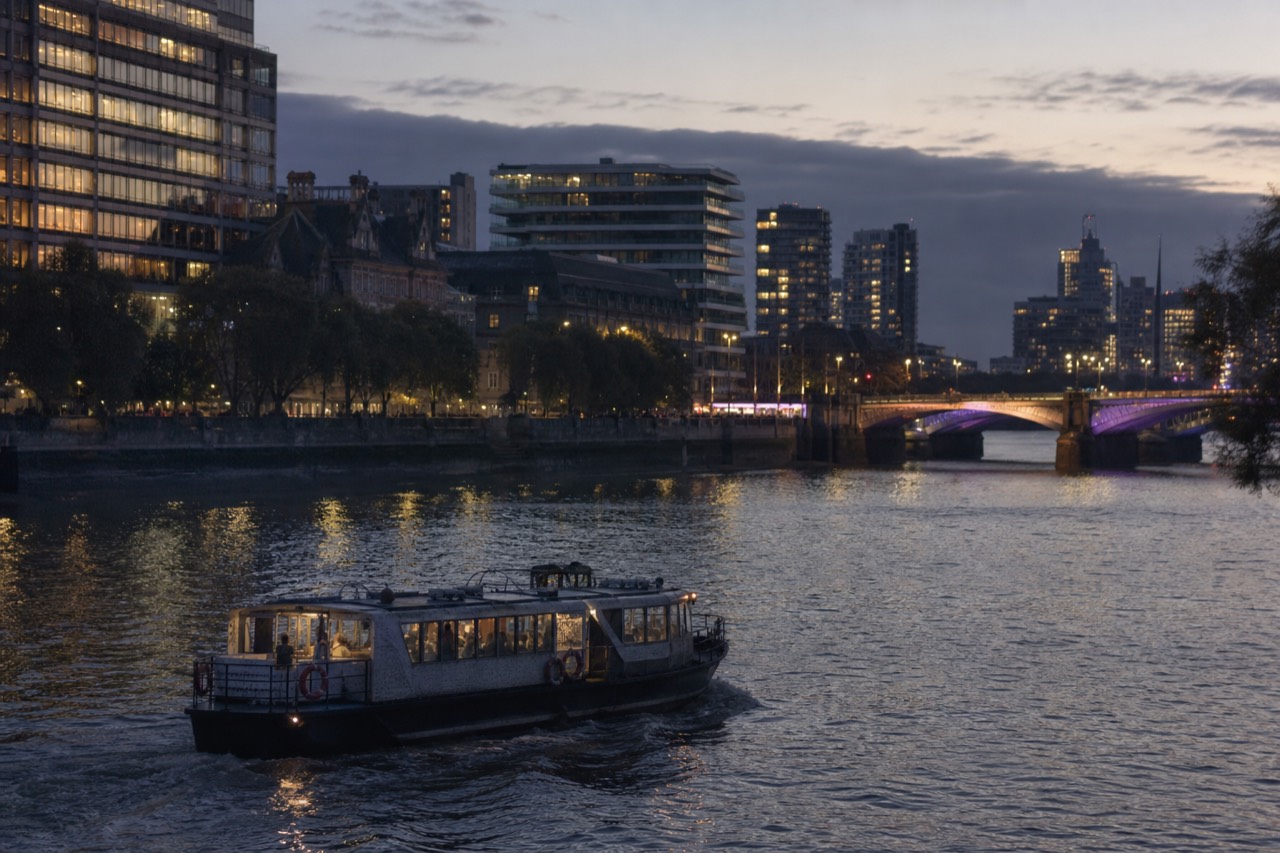
Three sailings leave central London piers within an hour of each other most afternoons, and they are selling three different rivers. The 15:30 tea boat leaves Tower Pier in flat daylight. The sunset speedboat times its departure so the lights come on during the run home. The 19:45 dinner boat leaves Westminster into what, for half the year, is already darkness.
Same water, same bridges, wildly different experience. The timetable is public and the prices are public, so the question of which hour to buy has a real answer rather than a matter of taste. I lined the published boarding times up against what each slot costs, what the light is doing, and how the seasons shift the whole calculation. The short version is that most visitors book the wrong slot, and they book it because it was the one that fitted rather than the one that was best.
What is the best time of day to take a Thames river cruise?
Late afternoon, roughly 15:00 to 17:00, is the best all-round slot: the light is low enough to give the buildings depth, the morning coach parties have cleared, and both the tea sailing and the last good sightseeing departures fall inside it. For photographs specifically, the hour before sunset wins. For price and quiet, the first sailings at 10:00 win.
The reason the late afternoon takes it is that it is the only slot where all three things people want overlap. Morning gives you quiet and cheap seats but flat, high light. Midday gives you visibility and warmth but the fullest boats of the day. After dark gives you the lit riverfront but no architecture. The stretch from three o'clock onwards gives you a low sun that models the buildings instead of flattening them, thinner crowds than at noon, and a full choice of departures still running.
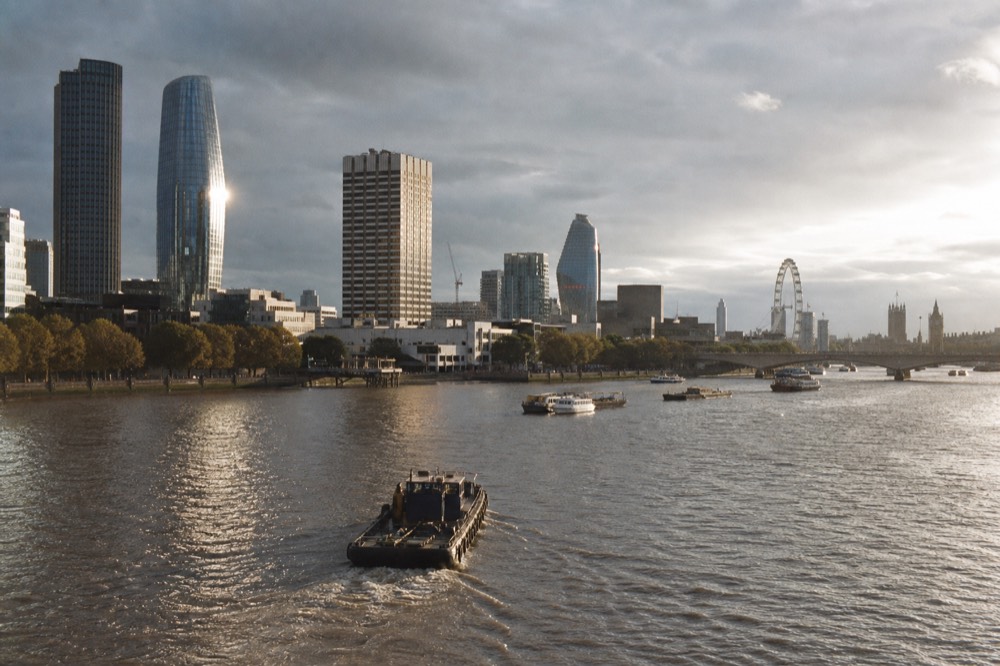
The counter-argument is real and worth stating. If you have children with you, the late afternoon is exactly when they run out of patience, and a 10:00 sailing with an empty top deck is worth more than perfect light. If you are trying to fit a cruise into a day that already has a fixed shape, the best time of day is the one you can actually make. The table below is the honest version, slot by slot, including what each one costs you.
| Slot | What is sailing | From | What you get | What you give up |
|---|---|---|---|---|
| From 10:00 | The first sightseeing departures, the day pass | £14 | Empty decks, calm piers, the cheapest tickets | High flat light, cold in winter |
| 11:45 | The lunch sitting from Tower Pier | £36 | A hot meal, full daylight on the buildings | The middle of your day |
| Midday to 15:00 | Every sightseeing boat, the speedboats | £14 | Maximum visibility, warmest deck | The busiest boats and piers of the day |
| 15:30 | The afternoon tea sailing | £40 | A table, a cake stand, softening light | One sitting only, so it sells out |
| Golden hour | The sunset speedboat, late sightseeing | £64.95 | The best light on the river, by a distance | Adults only on the speedboat, timing moves weekly |
| From about 19:45 | The dinner sittings and evening cruises | £35 | The lit riverfront, live music, an occasion | The buildings themselves disappear |
Is an early morning sailing worth the start?
Yes, for quiet and for price, and no for light. The first sightseeing departures go from about 10:00 and the boats are close to empty, which means the open top deck is yours and the pier queues have not formed. The trade is that mid-morning light in London sits high and flat, and the north bank is not yet doing anything interesting.
Emptiness is a genuine product on this river. In July the top deck of a midday sightseeing boat fills within minutes of boarding, and the difference between a seat at the rail and a seat behind a row of heads is the difference between a good hour and a mediocre one. At 10:00 that problem does not exist. Reviewers who sail early almost never mention crowds, and reviewers who sail at two o'clock mention little else.
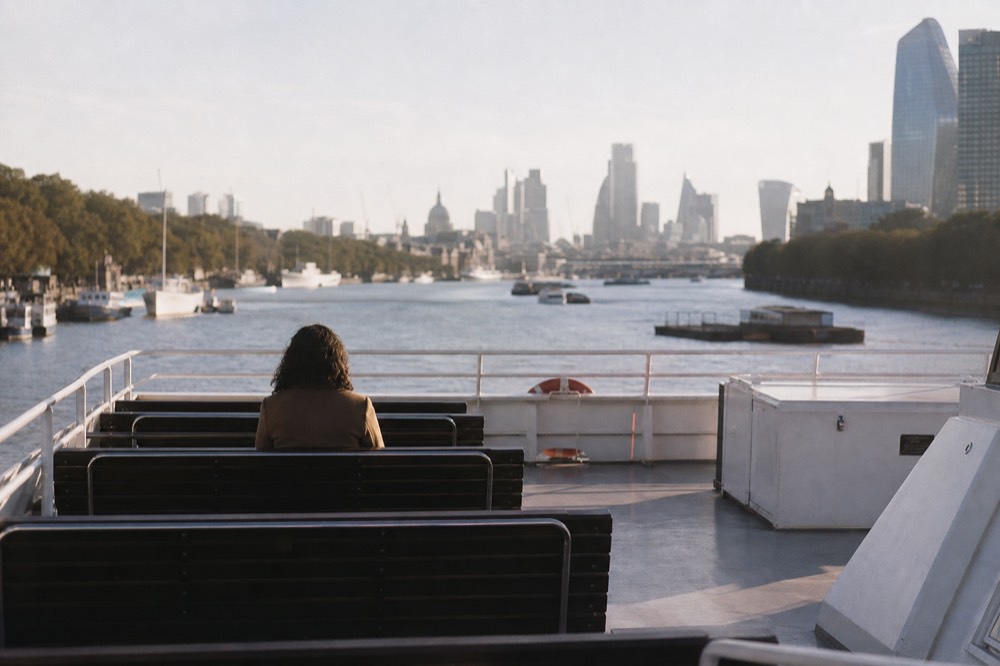
The pier logistics also work better first thing. The main central operator asks passengers to arrive at least 15 minutes before departure and longer if buying at the ticket office, and at 09:45 that margin is generous. At 13:45 in August it is the bare minimum. Anyone travelling with a group, a pushchair or a tight connection afterwards will find the morning sailing simply easier to execute.
What a morning does not give you is the river at its best-looking. The sun is high, the shadows are short, and the buildings that photograph well later in the day read as flat surfaces. Add typical London morning haze in summer and the far bank goes soft. If your reason for booking is photographs, the morning is the wrong slot even though it is the pleasant one.
There is one morning-specific bonus that nobody advertises. The working river is busiest early: freight, service craft and the river bus network all running at commuter frequency, so the water around you has more going on than it will at three in the afternoon. That traffic is part of what makes the Thames feel like a working waterway rather than a scenic lake, and it is best seen before ten. The whole tidal river is overseen by the Port of London Authority, whose remit runs 95 miles from Teddington to the North Sea, and the commercial craft you pass at that hour are the reason it exists.
What is midday on the river actually like?
Bright, busy and the best slot for actually seeing things. Between about 11:00 and 15:00 the whole fleet is running, visibility is at its highest and the buildings are fully readable. It is also the fullest part of the day: the top decks fill, the piers queue, and the price is no lower than at any other daylight hour.
Midday is the default booking and it is a perfectly good one. Nothing is hidden, the commentary lines up with what you can see, and if the point of the trip is to look at London rather than to photograph it, this is the slot that shows you the most. The lunch sitting sits right inside it, boarding at 11:30 and away at 11:45 for 105 minutes, which is the only way to eat a hot meal on the river in full daylight.
The crowding is the honest downside and it is worse than most people expect in summer. On a fine August afternoon the open deck of a sightseeing boat is standing room within a couple of minutes of boarding, and the saloon seats fill with everyone who arrived late. The workaround is not clever: arrive earlier than the operator asks, go straight up, and accept that the first ten minutes at the pier decide the quality of the next sixty.
Midday also suits the fast boats better than the light does. The speedboats spend the first part of every run at walking pace through the bridge zone and then open up downstream, and that eastern stretch towards Canary Wharf and the Thames Barrier is bleak and grey in poor light. Bright midday makes it legible. The speedboat and RIB comparison sets out how far each run goes.
One structural point in favour of the middle of the day: it is the only window when every ticket type is available at once. The circulars, the Greenwich one-way, the day pass, the fast boats and one meal sitting all run through it. By 18:00 the pass has stopped, by 17:00 the tea boat is back on its mooring, and after dark the choice narrows to a handful of evening sailings. If flexibility is what you want, midday is where the options live.
Is golden hour the best slot for photographs?
Comfortably, yes. The hour before sunset does two things nothing else does on this river: it puts warm low light onto the north bank, which faces south and takes the sun full on, and it catches the moment the city lighting comes up while there is still colour in the sky. The sunset speedboat at £64.95 is built around exactly that window.
The geometry is what makes it work. Through the central reaches the Thames runs roughly west to east, so the north bank faces south and holds light all day, and in the last hour that light arrives almost horizontally along the river. St Paul's, the Tower and the City towers go warm and three-dimensional. The south bank, which spends most of the day in its own shade, finally gets some modelling too.
The second effect is the one photographers actually chase. For twenty minutes or so after the sun goes, the sky still carries colour while the floodlights and window lights are already on, and the river reflects both. That overlap is the single best-looking condition on the Thames and it is short. Book a sailing that ends before it and you miss it entirely. Timing is also half of whether to book in advance at all, because the sailings that hit this window are the ones that fill first.
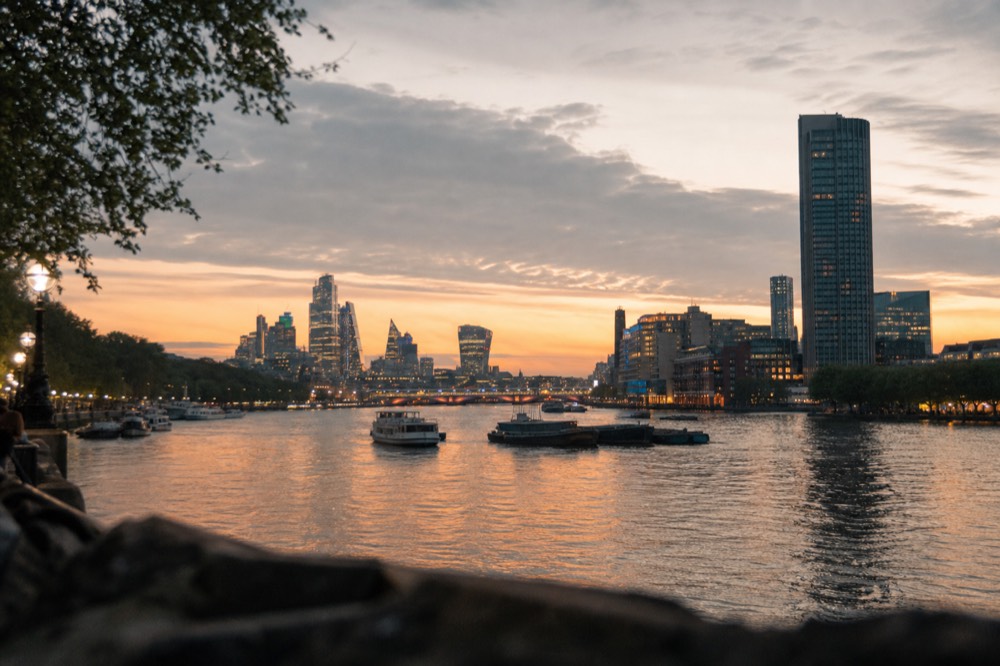
Two products are timed for it deliberately. The 50-minute sunset speedboat from London Eye Pier runs so that the lights come on as it heads back upriver, and at 5.0 across 249 reviews it is one of the best-rated things on the water. It is adults only and carries a maximum of twelve, which is the reason it books out on summer weekends. The two-hour evening sailing with a glass of sparkling and canapés from Tower Millennium Pier does the same job more slowly and for £35, with live music aboard.
The catch with golden hour is that it will not sit still. Its clock moves every single week of the year, and it moves a long way: London's sunset swings by well over five hours between midsummer and midwinter. A "sunset" departure booked in June and the same product booked in December are separated by most of an evening, which is why these sailings publish moving departure times rather than a fixed one. If this is the slot you want, check what time the sunset run actually leaves on your date rather than assuming an evening hour.
What changes on the river after dark?
Everything except the route. The buildings stop being architecture and become lighting, the water goes flat and black, and the bridges take over as the main event. The evening fleet is small and priced in two tiers: £35 for two hours with canapés and a glass, or £87 and up for a three-hour dinner sitting.
After dark the river reads as a series of lit objects rather than a continuous frontage. Tower Bridge is floodlit from below, the Millennium Bridge is a thin blue line, the National Theatre throws colour onto the water, and the City towers become grids of window light. Anyone expecting to see the same buildings they would see at noon, only prettier, is going to be surprised: you see far less, but what you see is more dramatic.
The evening sittings all depart within a fairly narrow band. The three-hour dinner cruise boards around 19:30 and leaves Westminster at 19:45, returning about 22:45. The Elvis tribute night starts boarding at 19:45 from Tower Pier. The jazz dinner leaves at 20:00 with tables seating four. The two-hour evening cruise with bubbly and canapés runs from Tower Millennium Pier with a live performer aboard, which makes it the cheapest way onto the lit river without committing to a meal.
Traffic thins out after the sightseeing fleet stops at 18:00, and that matters more than it sounds. The wash from other boats drops away, the water goes glassy, and reflections hold instead of breaking up. It is the calmest the river gets on any given day, and it is the reason evening photographs of the Thames look so much cleaner than daytime ones despite having far less to work with. That quiet is partly a function of how the river is used now: London river services carried a record of roughly 10.5 million journey stages in 2024/25, up about 9 per cent year on year, according to Transport for London's Travel in London analysis, and almost all of that movement happens before the commuter boats stop.
What you lose is the daylight fleet. The 24-hour hop-on hop-off pass sails daily between 10:00 and 18:00, so it is not an evening ticket at any price, and booking one for a lit-river night is a common and expensive mistake. The circulars and the Greenwich one-way also wind down through the late afternoon on most seasonal timetables. Evening on the Thames means the evening products, and the full set is compared in the night cruise guide.
How does the season move the best hour?
A long way. The clock times on the boats barely change through the year, but the light behind them moves by hours, so the same 15:30 departure is a bright afternoon sailing in June and a dusk sailing in December. Winter is the only season where an ordinary daytime ticket buys you the lit river.
This is the most useful thing on this page and almost nobody plans around it. The tea sailing leaves at 15:30 every month of the year. In late June it returns to Tower Pier at five o'clock in broad daylight with hours of sun still to come. In late December that same sailing spends its second half in fading light and puts you back on the pontoon at dusk, with the buildings already lit. Identical ticket, identical price, completely different cruise.
The same logic applies to the sightseeing boats. In midwinter a mid-afternoon departure is effectively an evening cruise for the price of a daytime one, which is the best-value trick on the river and the reason the quiet season is worth more than its reputation. The boats have inside seating and are fully heated, so the cold is a coat problem rather than a comfort problem.
| Season | 2026 window on the river | What the light does | Best slot to book |
|---|---|---|---|
| Off-peak spring | 23 March to 21 June | Lengthening evenings, clean air after rain | Late afternoon, or an early sailing for empty decks |
| Summer peak | 22 June to 6 September | Long light, haze in the middle of the day, extended evening sailings | Golden hour, which sits late enough to be a proper evening |
| Off-peak autumn | 7 September to 25 October | Low sun by mid-afternoon, the best modelling of the year | Mid-afternoon, and the tea sitting lands beautifully |
| Winter | 26 October 2026 to 22 March 2027 | Light going by mid-afternoon, reduced timetables | Mid-afternoon: a daytime ticket that ends after dark |
| Late December | No service 24 to 26 December on one operator, Christmas Day closure on the other | Shortest days of the year | Check the date is sailing at all before planning around it |
Two scheduling details go with that table. The summer peak window from 22 June to 6 September 2026 is the only season carrying extended evening options on the central sightseeing timetable, so a plain evening sightseeing sailing is a summer product rather than a year-round one. And late December is the one period where you need to confirm a boat is running at all: one Greenwich-corridor operator publishes no service from 24 to 26 December, while the main central fleet closes only on Christmas Day.
Does the tide decide when you sail?
Not in central London. The sightseeing timetables through the middle of the city are fixed and published, and the operators do not attribute their departure times to the tide. Further upstream it is a different story: at least one operator on the Kew and Hampton Court runs states plainly that its sailing times vary from day to day with the tides.
The Thames through London is genuinely tidal, and the Port of London Authority publishes the official tide prediction tool for the river. That is worth a look if your plan hangs on an exact time upstream, or if you care about how the foreshore will look. It is not something a central sightseeing passenger needs to think about, and any page telling you all Thames cruises are tide-dependent is overstating it.
Where the tide does show up in central London is at the pier rather than on the water. Pontoons float, so the gangway angle changes through the day, and the river bus network cites exactly that when explaining why three of its piers are not step-free: the brow can become too steep at certain states of the tide. If anyone in your party has limited mobility, that is the real tidal consideration, and it applies at boarding rather than during the cruise.
Weather has more influence on which hour to pick than the tide does. Rain does not usually cancel a sailing, because the boats have indoor seating and are fully heated, but it does cost you the open deck, which is where the cruise actually happens. On a marginal forecast the sensible move is to book the slot with the best chance of dry air rather than the best light, and if the operator does cancel because circumstances beyond its control make the sailing impossible, adverse weather included, the booking price is refunded. Free cancellation up to 24 hours before departure applies on most listings, though the terms sit on the individual listing and a few differ.
Small fast boats are the exception to all of that. There is no indoors on a twelve-seat rigid inflatable, and the waterproofs the crew hand out are the whole weather plan, so time of day matters less on those than the forecast does. In practice this pushes the fast boats towards the middle of the day for anyone booking in winter, and towards golden hour for anyone booking in summer.
What does each time slot cost?
Daytime is the cheap end and evening is not. Sightseeing tickets from 10:00 onwards start at £14 to £17.20. The daytime meal sittings run £36 to £40. After dark the range jumps to £35 for two hours with canapés and £87 to £109 for a three-hour dinner. Golden hour sits on its own at £64.95 for the sunset speedboat.
The pattern is clean once you lay it out: you pay for what is included, not for the hour. The cheapest evening ticket on the river, the two-hour sailing with a glass of sparkling and canapés at £35, actually undercuts the daytime tea sitting at £40 and the lunch sitting at £36 while giving you more time on the water. Per hour afloat it is £17.50, which makes it the cheapest hour of any sailing with food attached, daytime included.
| Time slot | The sailings in it | From | Rating (reviews) |
|---|---|---|---|
| From 10:00 | Tower Bridge circular from Westminster | £14 | 4.2 (523) |
| From 10:00 | London Eye 40-minute circular | £15.50 | 4.8 (1,912) |
| From 10:00 | Westminster to Greenwich one-way | £17.20 | 4.5 (25,220) |
| 10:00 to 18:00 | 24-hour hop-on hop-off pass | £24.95 | 4.4 (3,283) |
| 11:45 | Lunch sitting, two courses | £36 | 4.5 (2,208) |
| Daytime, any hour | Tower RIB Blast, 20 minutes | £37.74 | 4.8 (268) |
| 15:30 | Afternoon tea sitting | £40 | 4.4 (3,823) |
| Golden hour | Sunset speedboat, adults only | £64.95 | 5.0 (249) |
| After dark | Evening cruise with bubbly and canapés | £35 | 4.4 (2,787) |
| From 19:45 | Dinner cruise, three courses | £87 | 4.3 (2,447) |
| From 20:00 | Jazz dinner cruise | £109 | 4.0 (241) |
Read that table for rating rather than price and the inversion is obvious: the most expensive sailing on it is the lowest rated, and two of the three best-rated products cost less than half of it. Price is a poor guide to satisfaction on this river, which is the pattern that runs through the whole fleet comparison on Thames River Cruises and through the ranked cruise guide.
If the evening is the slot you want but the dinner bill is not, the two-hour sailing from Tower Millennium Pier is the answer the listings bury. Live music, canapés, a glass of sparkling, the lit river for two hours, and £52 less than the cheapest dinner sitting. It is the most-reviewed evening product that is not a full dinner, and you can see which evenings are still open before you default to a daytime ticket. What a cruise takes out of your day at any hour is worked through in how long a Thames cruise takes, and whether the whole thing is worth booking at all is argued in is a cruise on the Thames worth it.
Common questions
What time do Thames river cruises start in the morning?
The central sightseeing departures typically begin around 10:00 and then run roughly every 30 minutes through the day in peak season, on published seasonal timetables. The 24-hour hop-on hop-off pass sails daily between 10:00 and 18:00. Meal sittings start later: lunch boards at 11:30 and afternoon tea at about 15:15.Is it better to do a Thames cruise during the day or at night?
It depends what you came for. Daytime shows you the buildings and costs less, with sightseeing tickets from £14 and full visibility of the architecture. After dark you get the floodlit bridges, flat black water and far less traffic, but the buildings themselves largely disappear. If you can only do one and it is your first time in London, take a daytime sailing.What is the best time of day for photographs on the Thames?
The hour before sunset and the twenty minutes after it. Low light comes almost horizontally along the river and lands on the north bank, which faces south, and then the city lighting comes up while colour is still in the sky. That overlap is short, so pick a sailing that ends inside it rather than one that finishes before it starts.Do Thames cruise times change in winter?
The boats keep similar clock times but the timetables thin out, and the light changes everything. The main central fleet runs a winter timetable from 26 October 2026 through to 22 March 2027, and one Greenwich-corridor operator publishes no service from 24 to 26 December. A mid-afternoon winter sailing effectively becomes an evening cruise, since the light goes while you are aboard.Is a sunset cruise on the Thames worth the extra money?
For the light, yes. The 50-minute sunset speedboat is £64.95 and rates a straight 5.0 across 249 reviews, running so the city lights come on as it heads back upriver, though it is adults only and carries a maximum of twelve. For a cheaper version of the same window, the two-hour evening sailing with canapés and a glass of sparkling starts at £35.Pick the hour first and the boat second. Late afternoon is the answer more often than not, golden hour is the answer if you are carrying a camera, and in December a three o'clock ticket quietly buys you both halves of the day.