How many corpses are in the Thames?
Nobody can count what the question asks. Here is what is on record: the Victorian returns, the modern police recovery figures, and the safety history behind them.
 By James Whitfield, London river and travel writer
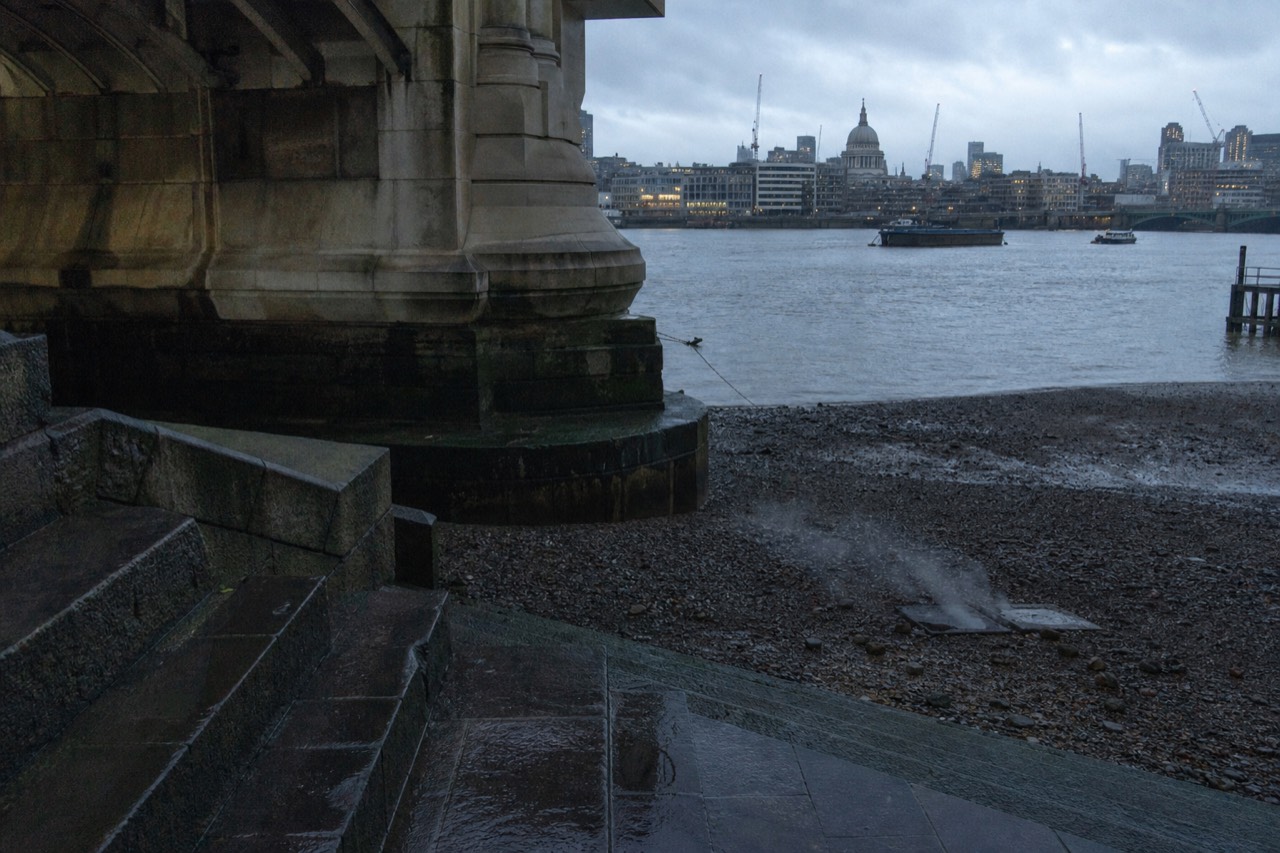
Under the northern end of Tower Bridge there is a small alcove lined with white tiles, with L-shaped stone steps running down to the water. It was built into the bridge during construction around 1886, and it has a name people still repeat on walking tours: Dead Man's Hole. The tiles were there so the space could be washed down. The steps were there because the current in that stretch delivered the dead to the same few yards of bank, over and over, and somebody had to go and get them.
That alcove is the reason this question gets asked at all. It is also the reason the question cannot be answered the way people want it answered. A river is not a cemetery with a register. What the Thames has instead is a long, uneven paper trail: parliamentary returns from the 1880s, coroners' files from the 1950s, police recovery logs from the last dozen years, and radiocarbon dates from bones lifted off the foreshore that are older than London itself.
This piece works through that paper trail in order, and it stays on the record throughout. These were real people. The tone here is the one a museum caption would take.
How many corpses are in the Thames?
There is no total and there cannot be one. What is counted is recovery, not presence. The Marine Policing Unit recovered more than 320 bodies from its stretch of the tidal river in the twelve years to early 2024, and the Port of London Authority's own estimate across the whole river is roughly one a week.
The distinction between what is in the river and what comes out of it matters more than it sounds. Every figure quoted anywhere, in any article, is a recovery figure. It counts the moment a body was found and logged by somebody with a duty to log it. It cannot count what the tide took out past the estuary, what settled into deep mud, or what nobody was looking for. Archaeologists working the foreshore have shown that the second category is not small: human remains have been entering this river since at least the Bronze Age, with radiocarbon work on skulls and bones from the riverbed confirming a pattern running back to around 2300 BC.
So the honest framing is a set of overlapping windows rather than a single number. Each window covers a different stretch of river, a different span of years and a different definition of what counts. Laid side by side they do tell you something real, which is that the rate has been oddly steady for a very long time.
| Period | The figure on record | What it counts | What it cannot count |
|---|---|---|---|
| Bronze and Iron Age | Radiocarbon dates running back to about 2300 BC | Skulls and bones recovered from the riverbed and foreshore | Everything that did not survive, and everything not yet found |
| 1882 | 544 bodies recovered, 277 open verdicts | Recoveries reported in parliamentary returns for a single year | Deaths never recovered; causes the inquest could not settle |
| Late 1950s | 66 to 82 cases in the coroner records later researchers used | Drownings with a known entry and exit point | The wider annual total for the river |
| 2004 to 2015 | 33 cases in the same academic comparison | Drownings where both entry and exit were established | Recoveries where the entry point was never known |
| 2012 to 2023 | More than 320 recoveries | Marine Policing Unit work between Dartford and Hampton Court | The river above Hampton Court and below Dartford |
| Recent years, whole river | About one a week | An estimate published by the harbour authority | Nothing at all: it is an estimate, not a count |
Read that table downwards and the shape of the problem appears. The 1882 number is the largest single-year figure anyone can point to, and it comes from a city with a fraction of today's river safety and none of today's search coordination. The modern numbers are smaller, better recorded and narrower in scope. None of them add up to an answer, and anyone offering you one has stopped reading the sources.
What did the Victorians actually record?
Parliamentary returns for 1882 recorded 544 bodies found in the Thames that year, of which 277 ended in open verdicts. That second number is the more revealing one: in more than half of all cases, the inquest could not establish whether the death was suicide, accident or something else, because the river had destroyed the evidence.
An open verdict is not a mystery in the dramatic sense. It is a coroner recording, formally, that the available facts do not support any single conclusion. On a tidal river in the 1880s that outcome was close to routine. A body might travel for days on successive tides before it was found, and the medical questions that a modern investigation resolves in an afternoon were simply unanswerable.
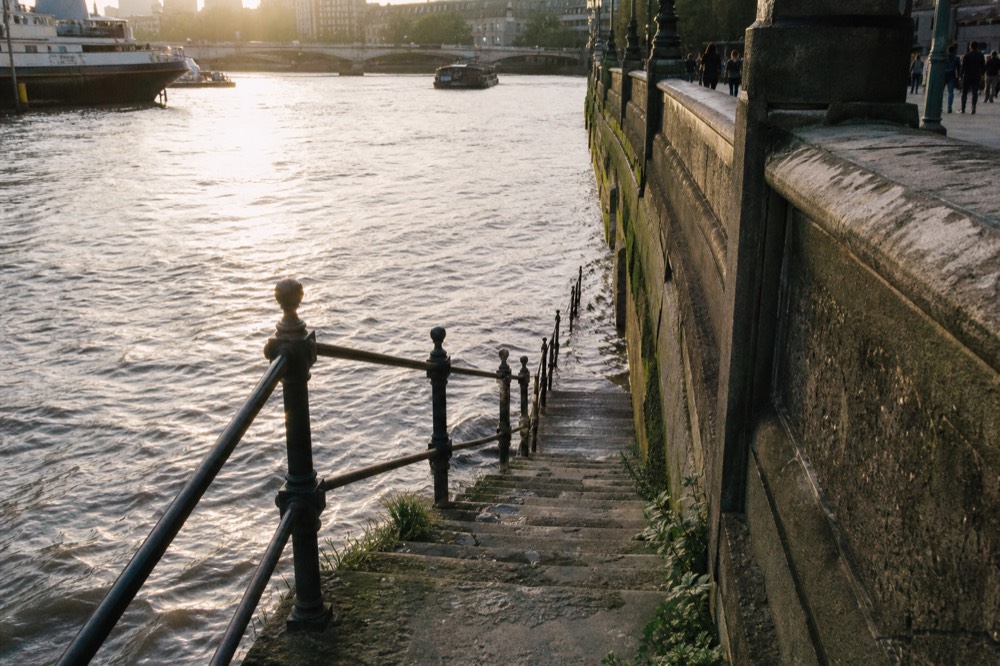
The Victorian river was also a far more crowded and industrial place than the one sightseeing boats cross today. Wharves ran continuously along both banks. Lightermen worked barges through the bridge arches on the tide, ships lay at moorings in the Pool, and thousands of people earned a living on and beside water that had no lighting, no lifebuoys, no radio and no lifeboat service. The river was the city's main road, its main drain and its main industrial site at the same time, and that triple role is a large part of why the Thames became so famous in the first place.
That combination is what produced the recovery points. Dead Man's Hole at Tower Bridge was one of several along the tideway, and similar named sites and docks existed elsewhere along the Thames and in other British ports for exactly the same reason: local officials knew where the water put things, and they built somewhere to receive them. It is a piece of infrastructure, in other words, and reading it that way is more useful than reading it as a ghost story.
What is Dead Man's Hole, and can you see it?
It is a tiled recovery point and former mortuary set into the northern abutment of Tower Bridge, built around 1886 as the bridge went up. Bodies washing into that stretch were brought ashore there, held and viewed for identification, then released to family or buried. It stopped functioning as a mortuary long ago and the alcove is still there.
The design tells you what it was for. White glazed tiles clean easily. The stone steps are cut in an L so they stay usable across the tidal range, which on this part of the river is considerable. The alcove sits low, under the bridge structure, out of sight of the roadway above. Nothing about it was decorative and nothing about it was secret either. It was a municipal facility, listed and staffed, in a city that needed one.
You can see the site from the bank on the north side of Tower Bridge, and you can see the abutment it sits under from the water on any of the central sailings that turn at St Katharine's or run downstream to Greenwich. From a boat the bridge reads completely differently to the postcard version: you pass under the walkways with the whole Victorian ironwork overhead, and the piers that carry it come at you as engineering rather than ornament. The hour-long circular from Westminster turns just past the bridge, which is the closest most visitors get to that north abutment at water level. If you want the bridge from underneath rather than from Tower Hill, check the live departure times before you plan the rest of the afternoon.
How many bodies are recovered from the Thames each year now?
Between 15 and 45 a year on the stretch the Metropolitan Police Marine Policing Unit covers, which runs from Dartford up to Hampton Court. The twelve years from 2012 to 2023 produced more than 320 recoveries in total. A police source has described the rate as broadly consistent for about fifty years, typically 28 to 40 annually.
The year-by-year run is worth seeing in full, because the averages hide how much it moves. 2012 was the lightest year on record in that series at 15. 2023 was the heaviest in recent memory at 45, roughly three times the 2012 figure, and the years in between mostly cluster in the twenties. No source in the record attributes the 2023 spike to any single cause, and it would be dishonest to invent one here.
| Year | Recoveries on the Marine Policing Unit stretch |
|---|---|
| 2012 | 15 |
| 2013 | 28 |
| 2014 | 21 |
| 2015 | 38 |
| 2016 | 28 |
| 2017 | 30 |
| 2018 | 26 |
| 2019 | 27 |
| 2020 | 20 |
| 2021 | 23 |
| 2022 | 23 |
| 2023 | 45 |
Two boundaries define that table. It covers the urban tidal stretch only, so the upper river and the estuary below Dartford sit outside it. And it counts what the unit dealt with, so a recovery made and logged elsewhere may not appear. The harbour authority's own broader estimate, roughly one a week along the whole river, is a different measure entirely and should never be added to the police figures.
The causes behind the numbers are recorded soberly and belong here the same way. Most Thames deaths are linked to suicide, put at around nine in ten in some reporting, and homicides are very rare. That is the single fact that should shape how anyone writes about this subject, and it is why the tabloid framing of the question is worth ignoring.
Why is the tidal Thames so dangerous?
Three things, working together. The water runs cold enough to disable a strong swimmer within minutes for most of the year. The tide moves fast through central London and reverses twice a day, so anything in the water travels. And it is a working navigation with commercial traffic, not a leisure lake, with almost no place to climb out along the embanked centre.
Cold is the part people underestimate. Cold water shock is immediate rather than gradual, and it takes away breathing control before it takes away strength, which is why swimming ability is close to irrelevant in the first minute. The Thames through London is fed from upstream and mixed with the sea on every flood tide, and it does not warm the way a lake does even in August.
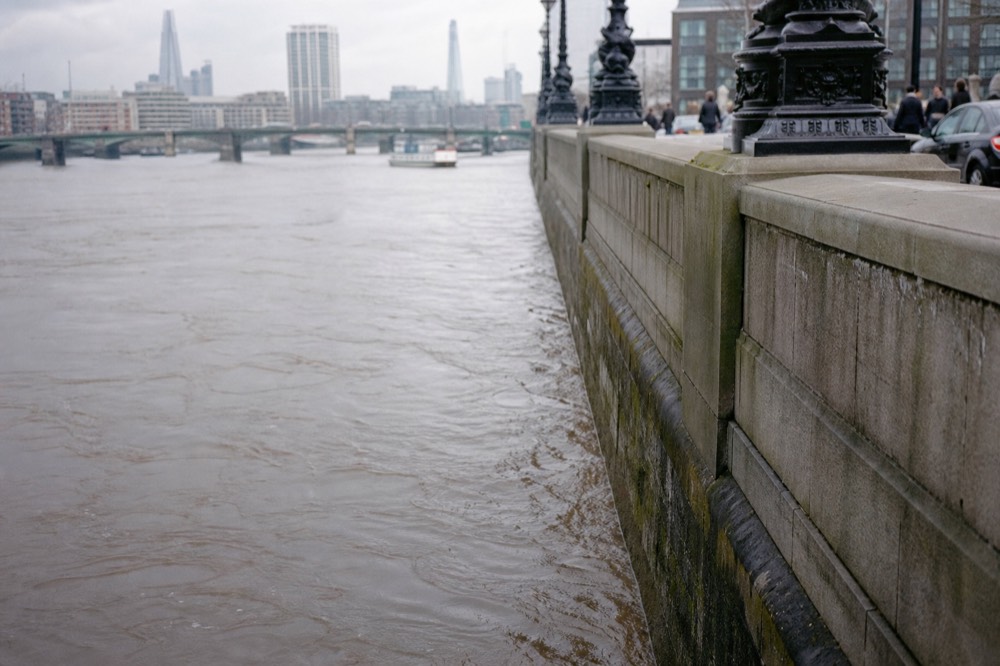
The second factor is the geometry of the centre. Between Westminster and Tower Bridge the river is walled on both sides, and the wall is high, vertical and often unbroken for hundreds of metres. The old stairs down to the foreshore survive at intervals and are visible from any passing boat, but they are widely spaced and many are unusable at high water. Somebody in the water there has no exit within reach, and the current is doing eight or nine hours of work in one direction before it turns and does the same in the other.
Third is traffic. This is a licensed navigation overseen by the Port of London Authority, whose remit covers 95 miles from Teddington to the North Sea, and the eastern stretch in particular carries genuine commercial shipping. The question of whether any of this makes the water safe to enter deliberately gets its own honest treatment in the piece on swimming in the tidal river, and the short version there is the same as the short version here.
What happened in the Marchioness disaster?
Shortly after midnight on 20 August 1989 the passenger launch Marchioness, carrying around 130 people on a private party, was struck and run down by the aggregate dredger Bowbelle near Cannon Street Railway Bridge. The launch sank within moments. Fifty-one people died and roughly 79 to 80 survived.
The official record is unusually complete and it is not ambiguous about cause. The Marine Accident Investigation Branch reported on the collision, and a formal investigation led by Lord Justice Clarke followed in 2000. Both found the primary failure to be poor lookout on both vessels, with contributing factors in vessel design, in working practices, and in oversight by the owners, the Department of Transport and the harbour authority. Criminal proceedings that followed ended without conviction. The full sequence of inquiries and findings is documented in detail and is worth reading properly rather than in summary.
What makes the Marchioness different from every other number in this piece is that it was preventable in a specific, identifiable way, and the state said so on the record. Fifty-one deaths in a single incident on a stretch of river that thousands of people cross every day forced a set of changes that nothing before it had managed to force.
Those changes are the reason the modern river looks the way it does from a passenger deck. When you pass an orange inshore lifeboat moored mid-river, or a police launch working slowly along the north bank, you are looking at the direct output of that inquiry rather than at something the river always had.
What changed on the river after 1989?
Clarke's report made 30 recommendations and the government accepted all of them. The visible results were better manning and training standards on passenger vessels, a Safety Management Code, search-and-rescue coordination led by London Coastguard, and, most significantly for anyone on the water today, dedicated RNLI lifeboat stations on the tidal Thames.
Tower station is the one that matters most in the centre. It went operational on 2 January 2002 with an E-class lifeboat, purpose-built for a fast, shallow, bridge-obstructed river rather than for open sea. It has since become the busiest station the RNLI operates anywhere, and in June 2023 it passed 10,000 service calls. Those calls are not all recoveries. Most are launches to people in the water, to vessels in difficulty and to reports of self-harm, and the point of the station is that it reaches them in minutes rather than in the time it once took to assemble a response.
| When | What happened | What it changed on the water |
|---|---|---|
| Around 1886 | Dead Man's Hole built into the north abutment of Tower Bridge | A designated recovery point where the current delivered the dead |
| 1882 | Parliamentary returns record 544 recoveries in one year | The clearest surviving snapshot of the Victorian river's toll |
| 20 August 1989 | Marchioness and Bowbelle collide near Cannon Street Railway Bridge | 51 deaths; the accident that triggered every reform below |
| 1990s | Marine Accident Investigation Branch reporting and a Thames Safety Inquiry | Vessel design, lookout and operating practice put on the record |
| 2000 | Lord Justice Clarke's formal investigation, 30 recommendations | All accepted by government; the reform programme set |
| 2 January 2002 | RNLI Tower station opens with an E-class lifeboat | Dedicated lifeboat cover on the tidal river for the first time |
| Since 2002 | London Coastguard leads river search-and-rescue coordination | One authority running the response instead of several |
| June 2023 | Tower station passes 10,000 service calls | Confirms it as the RNLI's busiest station anywhere |
There is a second, quieter legacy in the licensing regime. Commercial vessels on the tidal Thames must be licensed by the harbour authority or certificated by another recognised body such as the Maritime and Coastguard Agency, and the masters of passenger vessels on inland waters need a boatmasters' licence to command them. Those requirements sit behind every ticket sold on this river, and the comparison of what each operator actually runs is where the practical end of that shows up.
Where can you see this history from the water?
At four places, mostly. The north abutment of Tower Bridge and its tiled alcove. The old river stairs cut into the embankment walls between Westminster and the Tower. The lifeboat and police moorings working the central reach. And the foreshore itself at low water, which is where the archaeology comes from.
The bridge abutment is the easiest of the four to actually visit: Dead Man's Hole sits at the north end of Tower Bridge, a few minutes' walk from the Tower of London, whose river wall and Traitors' Gate carry eight centuries of the same waterline history; entry tickets are here, a separate booking from any sailing.
The foreshore is the one that surprises people. Twice a day the tide drops far enough to expose gravel, brick, bone and clay pipe along both banks, and it is a scheduled archaeological environment rather than a beach. Searching, metal detecting, scraping or digging any of it requires a current permit from the Port of London Authority, issued jointly with the Crown Estate, valid from the Teddington and Richmond lock area down to the Thames Barrier and not east of it. The foreshore permit rules set a standard permit at £42 for a year, a minimum age of 12, and a maximum digging depth of 7.5 centimetres. Every participant needs their own. What people actually turn up doing it is the subject of the piece on the strangest Thames finds.
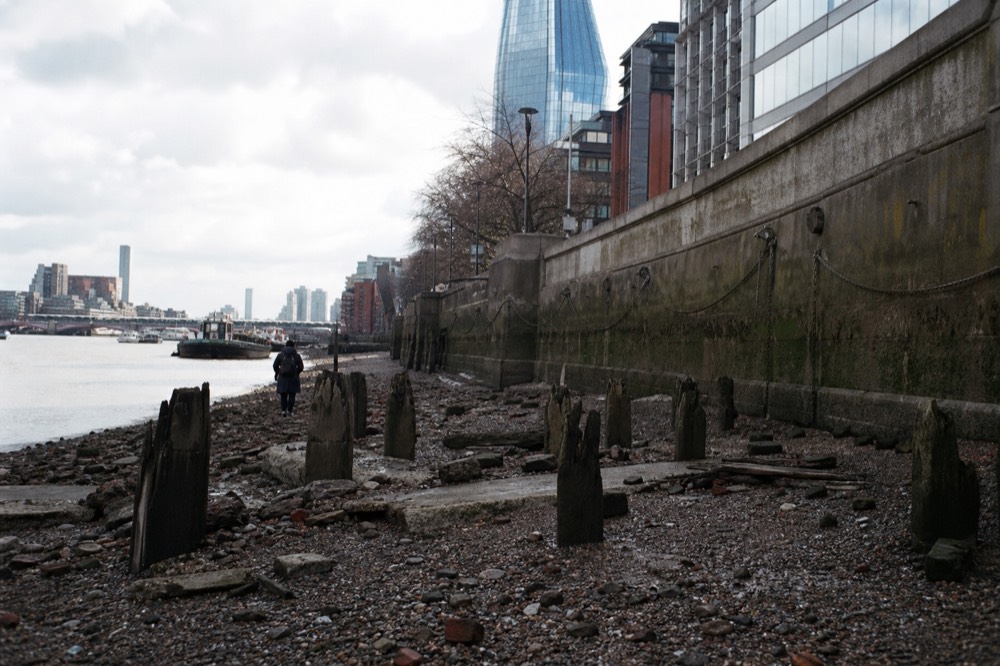
From a passenger deck you get the other three without any effort at all. The stairs appear every few hundred metres once you know to look for them, cut into the granite and green at the bottom. The moorings are unmistakable. And the bridge, on the downstream run, arrives slowly enough to take in properly. The full route and what sits on each bank is mapped out in the Westminster to Greenwich guide, and the ranked comparison of every sailing that covers this water lives on Thames River Cruises.
| Place | What it is | How you see it | Worth knowing |
|---|---|---|---|
| Tower Bridge north abutment | Dead Man's Hole, the tiled Victorian recovery point | From the bank on the north side; the abutment from any boat that turns at St Katharine's | No longer a mortuary; the alcove and steps survive |
| Embankment river stairs | Working access to the foreshore, some medieval in origin | Continuously from the water between Westminster and the Tower | Many are unusable at high water and slippery at any state of tide |
| Lifeboat and police moorings | The post-1989 safety infrastructure | Mid-river on the central reach, from any central sailing | Tower is the RNLI's busiest station anywhere |
| The foreshore at low water | The archaeological layer, exposed twice a day | Best from the water at low tide, or on foot at recognised stairs | Searching or digging needs a Port of London Authority permit |
If the aim is simply to see the stretch this history happened on, the one-hour downstream run is the version that covers all of it in order, from Westminster past Cannon Street Railway Bridge and the Pool of London to Greenwich. It is the most-booked sailing on the river by a wide margin, and you can see what your date costs before deciding which way round to do the day.
Common questions
Is there a real number for how many bodies are in the Thames?
No, and there never has been. Every published figure counts recoveries, meaning bodies found and formally logged, not bodies present. The most-quoted modern measure is the Marine Policing Unit's total of more than 320 between 2012 and 2023 on the stretch from Dartford to Hampton Court, alongside the harbour authority's estimate of roughly one a week across the whole river.What was Dead Man's Hole used for?
It was a recovery point and mortuary built into the northern abutment of Tower Bridge around 1886, during the bridge's construction. Bodies that the current brought into that stretch were taken ashore there, held and viewed for identification, then released to family or buried. The white tiles were practical rather than decorative, and it has not functioned as a mortuary for a very long time.How many people died in the Marchioness disaster?
Fifty-one. The passenger launch Marchioness was carrying around 130 people when the dredger Bowbelle ran her down near Cannon Street Railway Bridge in the early hours of 20 August 1989, and she sank almost immediately. Roughly 79 to 80 people survived. The inquiries that followed found poor lookout on both vessels to be the primary cause.Did anything good come out of the Marchioness inquiry?
Yes, and it is the reason the river is covered the way it is today. Lord Justice Clarke's 2000 investigation made 30 recommendations, all accepted by government, producing better manning and training rules on passenger vessels, a Safety Management Code, coordinated search and rescue under London Coastguard, and dedicated RNLI lifeboat stations on the tidal Thames. Tower station opened on 2 January 2002.Are Thames cruises safe?
The regime behind them is procedural rather than reassuring-sounding, which is the point. Commercial vessels on the tidal Thames must be licensed by the harbour authority or certificated by another recognised body such as the Maritime and Coastguard Agency, the masters of passenger vessels on inland waters hold a boatmasters' licence, and lifeboat and police cover on the central reach is permanent and fast.The question people type into a search box has no answer, but the record behind it does, and it is a better story than the one the question implies. A tiled alcove built into a bridge in 1886. Parliamentary returns from a city that lost track. A collision in the dark in 1989 that changed the rules. A lifeboat station that now launches more often than any other in the country. Seen from a passing deck, all of it is still there.